
Business Fraud and Misrepresentation Claims in New York: What Nassau & Suffolk County Entrepreneurs Can Do ?

Running a business on Long Island often involves contracts, partnerships, and trust in the statements of vendors, investors, and other businesses. While most relationships are successful, false or misleading representations can cause significant financial harm. Under New York law, businesses that suffer losses due to fraud or misrepresentation may pursue legal remedies through commercial litigation. Understanding these claims is important for businesses in Nassau and Suffolk Counties to protect their financial interests and long-term success.
What Is Business Fraud Under New York Law?
New York common law fraud requires proof of five distinct elements. Courts will look at whether:
- The defendant made a material misrepresentation of fact
- The statement was false when it was made
- The defendant knew it was false, or made it with reckless disregard for its truth
- The intent was to induce the plaintiff to rely on the statement
- The plaintiff suffered actual damages as a direct result of justifiable reliance on that statement
All five elements must be proven. If even one is missing, a fraud claim may fail, which is why working with an experienced Nassau County commercial litigation attorney matters from the very start.
The standard for fraud in New York is intentional conduct. If the misrepresentation was not deliberate, the claim may instead fall under negligent or innocent misrepresentation, which carry different legal standards and potentially different remedies.
The Three Types of Misrepresentation New York Courts Recognize
Understanding which type of misrepresentation applies to your situation shapes the entire legal strategy.
Fraudulent Misrepresentation
This is the most serious category. Fraudulent misrepresentation occurs when someone knowingly makes a false statement to induce another party into a business transaction. Think of a seller who lies about a company’s revenue figures to close a deal, or a partner who conceals existing debts before bringing you into a venture. In these cases, the deception is intentional, and New York courts can award compensatory damages as well as, in some circumstances, punitive damages.
Negligent Misrepresentation
Negligent misrepresentation in New York does not require proof of intentional deception. Instead, it applies when someone in a position of special knowledge or trust provides false information carelessly, without verifying its accuracy, and another party suffers harm as a result. This often arises in professional advisory relationships such as accountants, brokers, or consultants who give inaccurate guidance that a business owner acts on to their detriment.
Innocent Misrepresentation
Innocent misrepresentation involves a false statement made without any knowledge that it was false and without negligence. While this is the least severe category, it can still support a claim for rescission of the contract in New York, meaning the court can unwind the deal and restore the parties to their original positions.
Business Fraud vs. Breach of Contract: Why the Distinction Matters

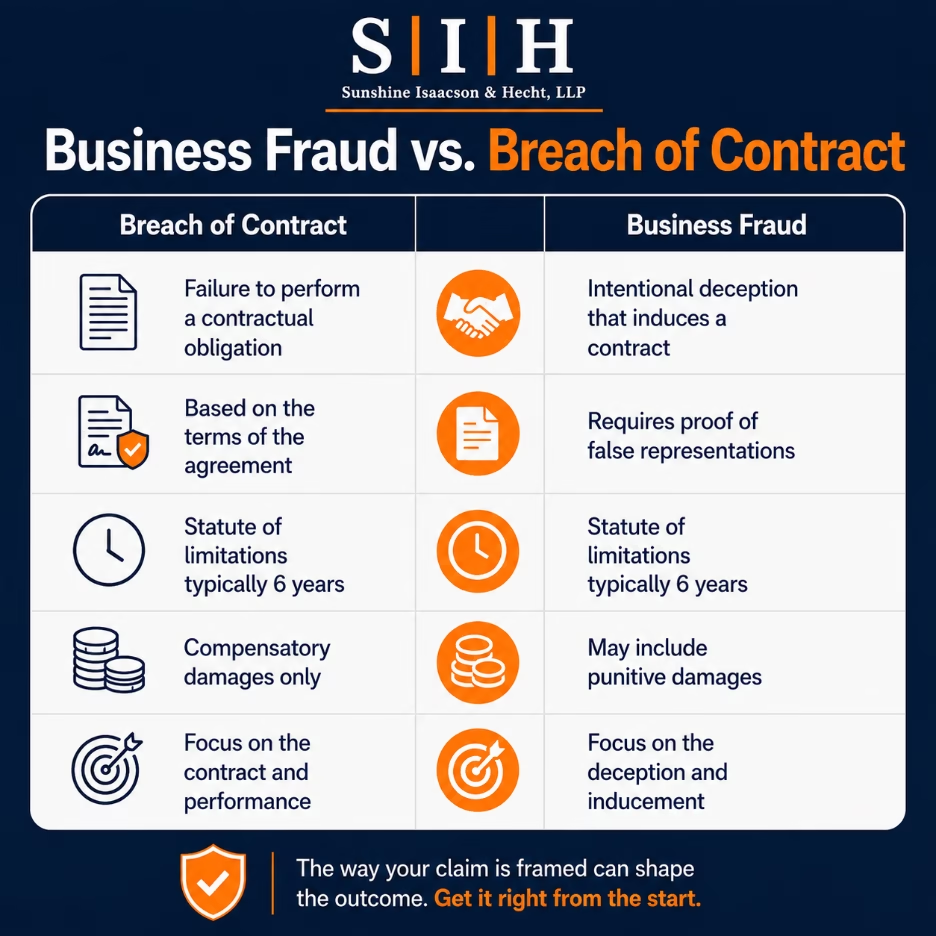
Many Long Island business owners assume that every dishonest business deal is simply a breach of contract, but New York law treats fraud and breach of contract as separate legal claims. A breach of contract involves failing to meet contractual obligations, while fraud requires intentional deception that induced the agreement. This distinction is important because fraud claims may allow broader remedies, including punitive damages in exceptional cases, when the legal requirements are met.
Common Business Fraud Scenarios in Nassau and Suffolk County
Business deception claims in New York arise across a wide range of industries. On Long Island, some of the most common situations our clients bring to us include:
- A buyer was given falsified financial statements before purchasing a business
- A contractor or vendor misrepresented the scope, quality, or licensing of their services
- A business partner concealed personal liabilities or conflicting interests before forming an LLC or partnership
- An investor was given misleading projections to secure funding
- A franchisor made false representations about territory exclusivity or expected revenue
These are not small or technical disputes. For Nassau and Suffolk County entrepreneurs, a single fraudulent transaction can wipe out years of investment and set a business back significantly.
If your situation involves a partnership or LLC dispute alongside fraud, those claims are often intertwined.
What Damages Can You Recover in a New York Business Fraud Case?
Damages for business fraud in New York depend on the type of claim and the severity of the deception.
For fraudulent misrepresentation, plaintiffs can typically recover:
- Out-of-pocket losses, meaning the difference between what you paid and what you received
- Consequential damages for losses that flow directly from the fraud
- Punitive damages in cases involving especially egregious or willful conduct
For negligent misrepresentation, the recovery is generally limited to actual economic losses without the possibility of punitive damages.
In cases involving rescission, the goal is not monetary damages but rather unwinding the transaction, returning money or property, and putting both parties back where they started.
New York courts do not award speculative damages. The harm must be real, documented, and directly tied to the false statement. This is another reason why detailed documentation from the beginning of any business relationship is critical.
How Nassau and Suffolk County Entrepreneurs Should Respond

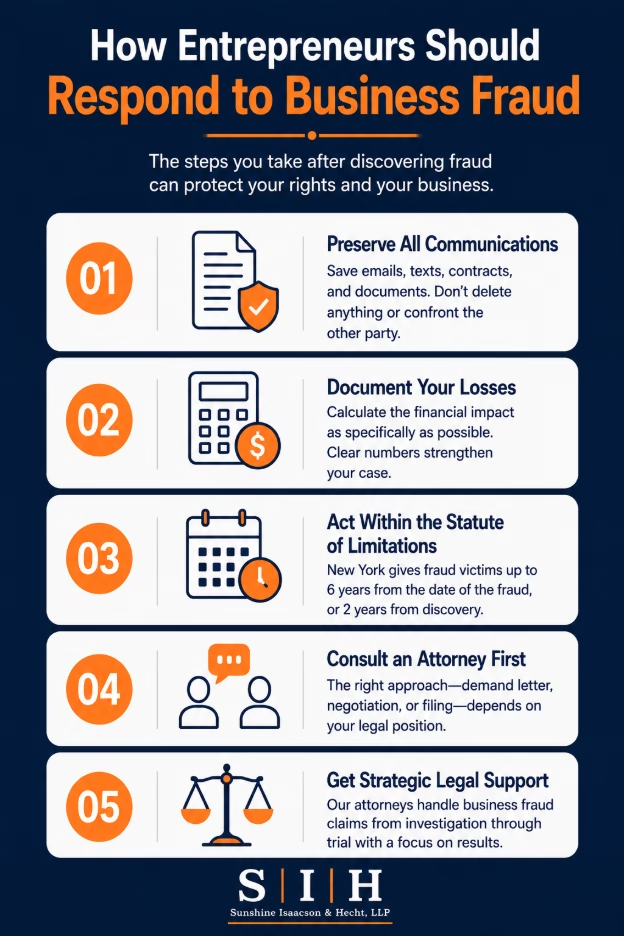
If you believe you have been the victim of business fraud in Nassau County or business fraud in Suffolk County, the steps you take immediately following discovery matter enormously.
Preserve all communications.
Emails, text messages, contracts, financial documents, term sheets, and meeting notes all become evidence. Do not delete anything, and do not confront the other party in writing before speaking with an attorney.
Document your losses.
Calculate the financial impact as specifically as possible. Vague damage claims are hard to litigate. The more concrete your numbers, the stronger your case.
Act within the statute of limitations.
New York gives fraud victims six years from the date of the fraud, or two years from the date it was discovered or reasonably could have been discovered, whichever is longer. Waiting too long can permanently bar your claim.
Consult a Long Island business fraud attorney before making any decisions.
Whether the right path is a demand letter, pre-litigation negotiation, or immediate filing in New York Supreme Court, that decision should be made with full knowledge of your legal position.
Our firm handles commercial litigation in Nassau and Suffolk County across the full range of business disputes, including fraud, misrepresentation, breach of contract, and partnership disputes. We also regularly represent business owners who have faced legal mistakes that led to lawsuits, and we understand how quickly a single bad deal can escalate into full litigation.
For fraud matters arising out of business relationships, our commercial litigation attorneys provide strategic representation from the initial investigation through trial.
Work With a Long Island Business Fraud Attorney Who Understands What Is at Stake
At Sunshine, Isaacson & Hecht LLP, we represent Nassau and Suffolk County entrepreneurs who have been harmed by the deliberate or negligent misrepresentations of others. Business fraud and misrepresentation claim in New York demand precise legal strategy, detailed evidentiary preparation, and attorneys who know how to litigate aggressively when the situation calls for it.
If you believe your business has been defrauded, do not wait. Contact our firm for a free consultation and let us evaluate your claim.
FAQ
What is the difference between fraud and misrepresentation in New York business law?
Fraud requires proof that the defendant knowingly made a false statement with intent to deceive. Misrepresentation can be fraudulent, negligent, or innocent, each with different standards of proof and different available remedies. Fraud is the most difficult to prove but also carries the most significant damage awards.
Can I sue for business fraud in New York if I signed a contract?
Yes. Having a signed contract does not prevent a fraud claim. If someone induced you to sign that contract through deliberate misrepresentation, you can pursue fraud claims alongside or separate from a breach of contract claim, provided the fraud allegation is not simply restating the contract’s breach.
How long do I have to file a business fraud claim in New York?
The statute of limitations for business fraud in New York is six years from when the fraud occurred, or two years from when you discovered it or reasonably should have discovered it, whichever period is longer. Missing this deadline generally bars recovery.
What evidence do I need to prove business fraud on Long Island?
Courts require specific, detailed allegations. Useful evidence includes written communications containing false statements, financial documents used to induce a transaction, witness testimony, and documentation of the losses you suffered as a direct result of the misrepresentation.
What is negligent misrepresentation and how is it different from fraud?
Negligent misrepresentation in New York does not require proof of intentional deception. It applies when someone in a position of authority or expertise provides false information carelessly, without taking reasonable steps to verify it, and another party relies on it to their financial detriment.
Can a business dispute involving fraud be resolved without going to court in Nassau or Suffolk County?
Yes. Many commercial fraud disputes in Nassau and Suffolk County resolve through negotiated settlements, mediation, or demand letters before litigation begins. Whether that approach makes sense depends on the strength of your evidence, the amount at stake, and the other party’s willingness to engage honestly.
Do I need a business litigation attorney in Nassau or Suffolk County specifically?
Local knowledge matters in Long Island litigation. An attorney familiar with Nassau County Supreme Court and Suffolk County Supreme Court procedures, local court rules, and the business landscape in these counties will handle your case more efficiently and effectively than a firm with no Long Island presence.
Can I recover punitive damages in a New York business fraud case?
Punitive damages are available in fraudulent misrepresentation cases in New York when the defendant’s conduct was intentional, malicious, or showed a reckless disregard for the rights of others. They are not available for negligent misrepresentation or innocent misrepresentation of claims.