
How Oil Contamination Affects Home Values: What the Data Actually Shows
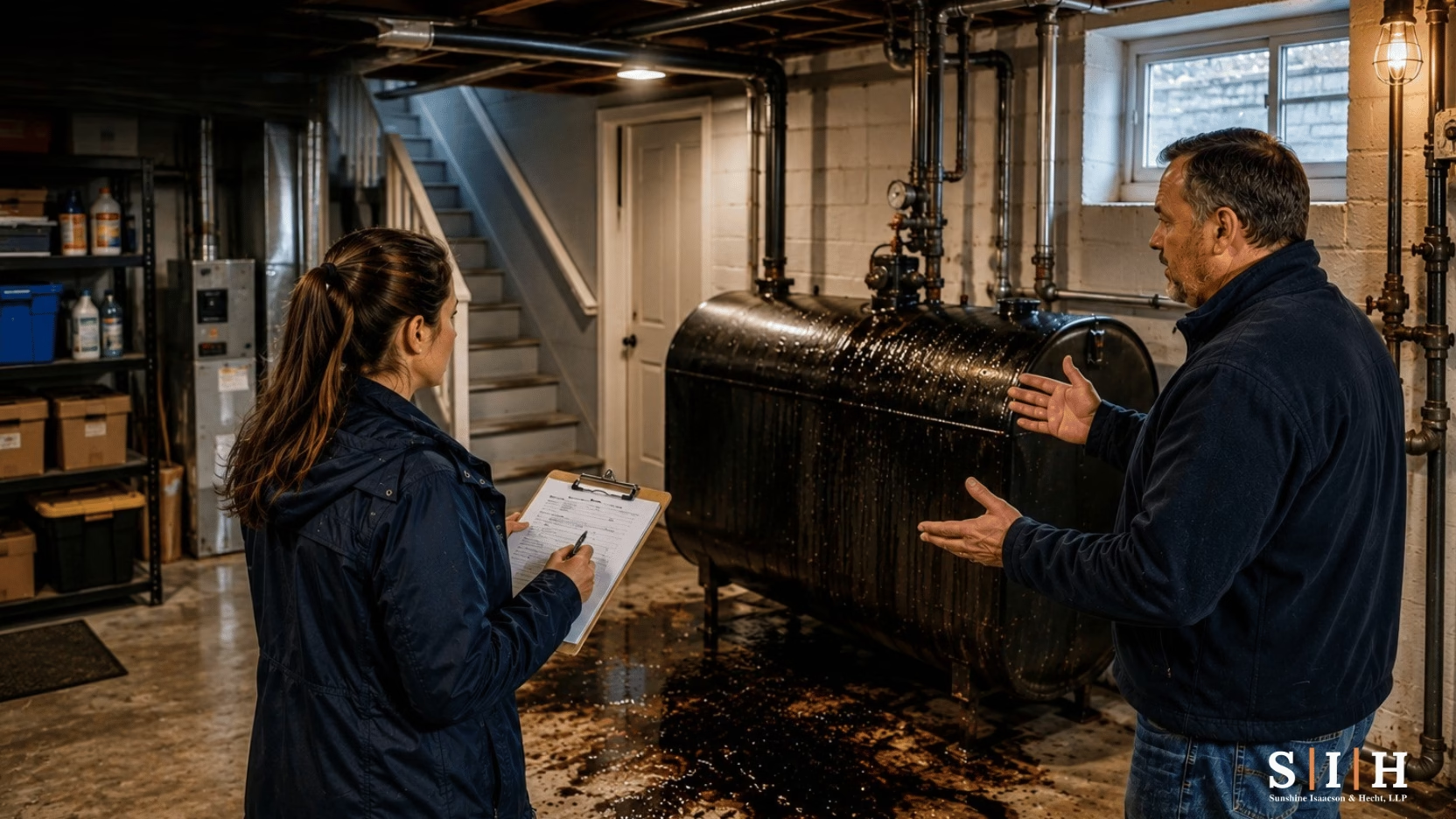
Discovering oil contamination on a property raises an immediate financial question: how much value has actually been lost, and is that loss temporary or permanent? Online sources tend to give sweeping, unsourced answers. The reality is more specific, and understanding what actually drives the numbers can shape how you approach cleanup, disclosure, and any claim for damages.
There’s no single reliable percentage for how much a residential oil spill lowers home value, despite what some online sources claim. The real drivers are remediation cost, buyer perception (stigma), lingering odor, a shrinking buyer pool, and financing friction, and how much these add up to depends on how far the contamination spread, how quickly it was found, and how well it’s documented.
Large-scale research on major spills shows these effects can be measurable and durable, sometimes lasting years, but the size of the discount on any single property comes down to the specific facts of that spill, not a generic number. Our real estate experts have found that the loss of home value can range from the thousands to the tens or even hundreds of thousands of dollars.
Why Contaminated Homes Lose Value
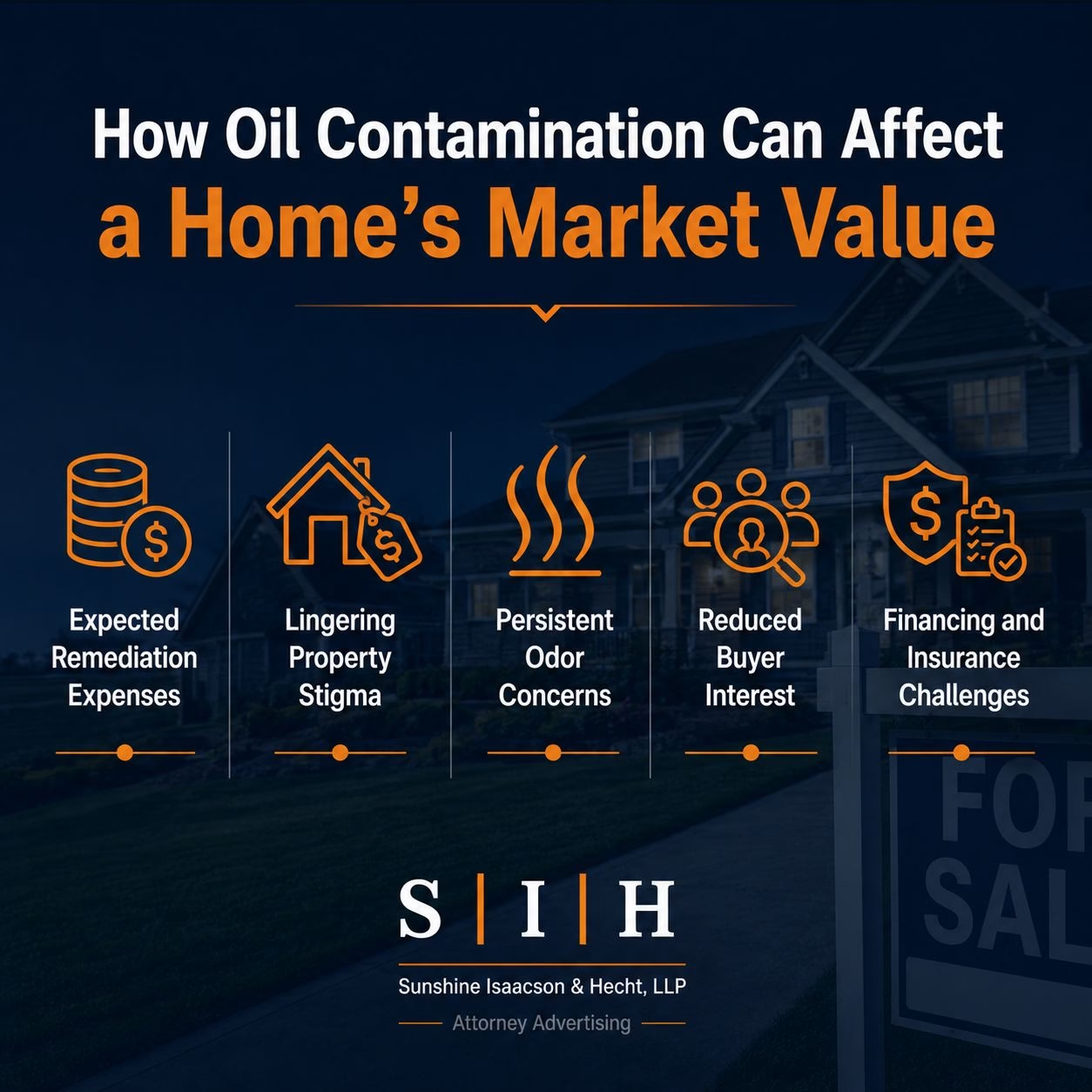
Buyers price in more than just the visible damage:
- Remediation costs get subtracted from the offer. Soil excavation, tank removal, and groundwater monitoring aren’t cheap, and buyers price in that expense even after cleanup work is underway.
- Stigma outlasts the cleanup. Buyers may assume testing missed something, especially with older tanks where leaks can go undetected for months. Appraisers increasingly account for this separately from direct cleanup cost.
- Odor can linger for years. Petroleum smell trapped in floorboards, drywall, or concrete can persist well past the point where a lab report calls the property clean, and it’s often the first thing a buyer notices during a showing.
- The buyer pool shrinks and listings sit longer. Risk-averse buyers frequently pass on a property once they learn of a documented spill, and homes with a contamination history tend to stay on the market well past the timeline of comparable, unaffected listings.
- Financing and insurance get harder to secure. Some lenders require an environmental site assessment before approving a mortgage on a property with a spill history, and some insurance policies exclude pre-existing environmental conditions.
What Drives the Size of the Loss
Not every spill affects value the same way. These factors typically separate a minor, short-term dip from a lasting one:
Factor | Smaller Impact | Larger Impact |
Scope of contamination | Contained to surface soil | Reached groundwater or foundation |
Time to detection | Caught within hours or days | Undetected for weeks or months |
Documentation | Closed case, verified cleanup | Open case, no closure confirmation |
Proximity to water | Inland, no nearby wells or wetlands | Near a well, wetland, or waterway |
Visible signs | None after cleanup | Persistent odor or staining |
Local market conditions | Competitive seller’s market | Slower market with more comparable listings |
Why This Happens: The Economics Behind It
Economists call this hedonic pricing: a home’s price reflects every amenity and disamenity attached to it, from school quality to environmental condition, not just its physical features. Documented contamination becomes a negative attribute the market prices in, similar to proximity to a landfill or a busy highway. That discount shrinks as documentation improves and time passes, but rarely disappears immediately, which is why even fully remediated properties can take time to fully recover.
How State Laws Typically Handle Spill Liability and Disclosure
Some states with meaningful oil spill regulation share a similar structure, though the specifics vary:
- Strict liability for the party responsible. In New York, for example, the party that caused the spill is liable for cleanup costs and resulting damages without the property owner needing to prove negligence.
- Mandatory reporting timelines. States commonly require spills to be reported to an environmental agency within a set window, often just a few hours, with narrow exceptions for very small, fully contained spills.
- Disclosure requirements at sale. Sellers of residential property are typically required to disclose known environmental contamination, including past petroleum spills, before a buyer signs a contract.
New York’s Navigation Law imposes strict liability on spillers and allows recovery of both cleanup costs and diminution in property value. New York also requires spills to be reported and disclosed. If you’re dealing with a spill and want to understand your immediate options, our guide on what to do right away after discovering an oil spill and our breakdown of how damages are calculated walk through the process in more detail.
Key Takeaways
- There’s no reliable single percentage for residential value loss; treat online figures skeptically and focus on the specific factors below instead.
- Impact size depends on scope, detection time, documentation, and proximity to water, not just the fact that a spill occurred.
- Many states require prompt reporting and disclosure of known contamination when selling.
- Both cleanup costs and diminution in property value can potentially be recovered from the responsible party, depending on your state’s liability laws.
- Fast reporting, thorough documentation, and a formal closure confirmation are the most effective ways to limit long-term value loss.
Getting Help with an Oil Spill Claim

Oil contamination can follow a home through appraisals, financing, disclosure statements, and years of resale value, not just the initial cleanup. If your property has been affected by a spill, speaking with an experienced oil spill attorney can help you understand what damages you may be entitled to recover and how to protect your property’s value going forward. Our firm represents clients in New York and Connecticut.
ATTORNEY ADVERTISING
This blog is provided for general informational purposes only and does not constitute legal advice or create an attorney-client relationship. Legal outcomes depend on the specific facts and circumstances of each matter. Consult SIH Attorneys to discuss your specific legal matter and learn about your legal options.
FAQ
How much does an oil spill actually lower a home's value?
It can be significant. Documented contamination can cause a shrinking buyer pool among other issues.
Do I have to disclose a past oil spill when selling my home?
In many states, yes. Disclosure laws typically require sellers to answer specific questions about known petroleum releases or environmental hazards before a buyer concludes the purchase.
Can I recover the loss in my home's value, or only the cleanup costs?
Depending on your state’s liability framework, both cleanup costs and diminution in property value may be recoverable from the responsible party. A value-loss claim generally requires supporting evidence, such as an independent appraisal.
How long does an oil spill affect a home's marketability?
It varies by case, but research on large-scale spills has found measurable effects on home values. A residential spill with prompt cleanup and clear documentation typically has a shorter practical impact on marketability.
What should I do first if I discover oil contamination on my property?
Report it promptly, document everything with photos, avoid disturbing the affected area, and consult a professional before making any repairs or agreeing to a settlement.


