
How an Oil Spill Can Impact Your Home’s Value in New York
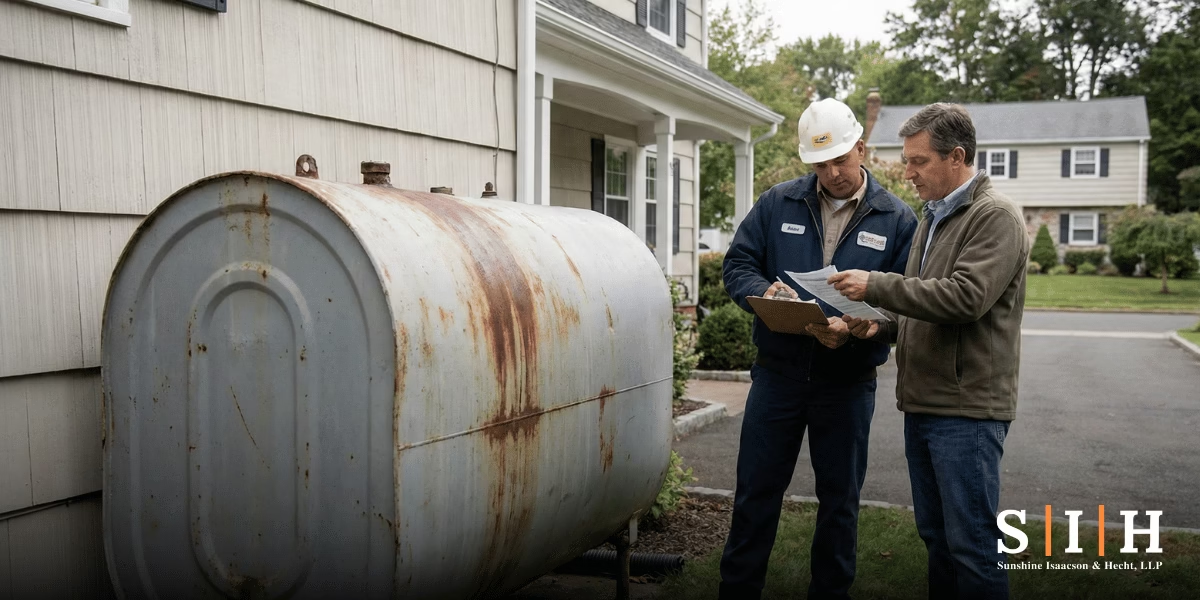
An oil spill at home is generally bad news for property value — even after remediation, buyers and appraisers often treat the property as higher-risk, which can mean lower offers, longer time on market, and disclosure requirements down the road. The good news: New York’s Navigation Law lets you recover cleanup costs and, in many cases, the loss in value from the party responsible for the spill.
Oil spills in residential houses are more prevalent than most homeowners know particularly in older houses. Even a minor oil spill in a congested market such as New York can have severe financial and legal implications. In addition to the Cleanup Expenses, oil contamination may impact the resale value, slow down transactions, and create red flags during inspections. The homeowners need to know how the oil spills affect the property value, and how buyers, lenders, and regulators react to it.
Why Oil Spills are an Issue
Oil is a toxic substance and can affect your health. The spread of heating oil can occur in foundations, shared walls, and underground areas, and it is difficult to contain the contamination. A spill can also impact nearby property raising additional issues of liability.
Oil contamination is not considered cosmetic damage; it is an environmental issue. Not only can it be harmful to your health but it can decrease the value of your real estate in today’s competitive market.
How Oil Contamination Affects Buyer Confidence
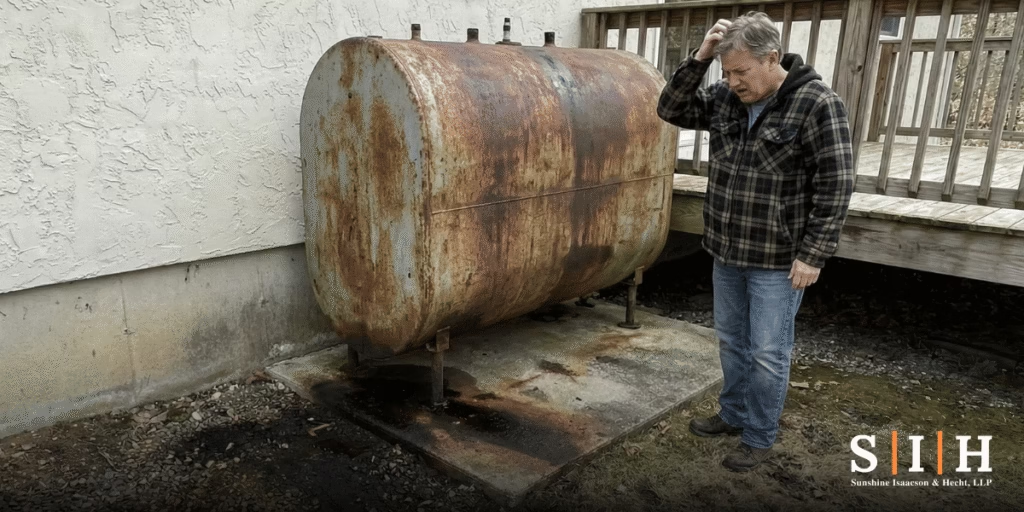
Buyers are risk-averse, especially in matters that concern the environment and the health of their family. Oil spills pose the issue of lingering odor, air quality and future problems with re-sale even after the remediation is done.
Environmental history may be a determining factor because buyers tend to compare several similar properties. A house where an oil spill is recorded can:
- Receive fewer offers
- Spend more time on the market.
- Be considered a problem property despite cleanup.
The market in New York is very dynamic, and any form of hesitation can be directly translated into value.
What to Do If You Find Oil on Your Property
If you’ve just found oil on your property, what you do in the first few hours matters just as much for your home’s value as it does for your safety. Here’s the immediate playbook:
- Keep everyone away from the affected area — people, pets, and especially children.
- Don’t touch or try to clean up the oil yourself beyond containing an obviously small surface spill.
- Identify the likely source if you can safely do so — a heating oil tank, delivery line, or neighboring property.
- Report it right away to the New York State Department of Environmental Conservation (DEC) Spill Hotline (1-800-457-7362) and, if it’s a heating oil delivery, to the oil company itself.
- Document everything — photos, videos, and the date/time you discovered it — before any cleanup crew arrives.
- Don’t sign anything the oil company or their insurer hands you before speaking with an attorney.
Reporting quickly and documenting thoroughly isn’t just about safety and compliance — it also creates the paper trail you’ll need later if you pursue a claim for lost property value. For a fuller step-by-step breakdown, see our guide on what to do right away if you spot an oil spill in NY
Summary Table: How Oil Spills Affect Home Value
Impact Area | NY Property Value Impact |
| Buyer Interest | Less demand because of perceived risk |
| Sale Price | Discounts or concessions negotiated |
| Time on Market | Delays in assessment or cleanup |
| Appraisal | Reduced valuation or terms |
Environmental Records and Long-Term Property History
Oil spills may still form part of the history of a property even after remediation. Years later, environmental reports, inspection findings and disclosure forms may be requested.
Remediation is beneficial, but the stigma might not be completely removed.
Selling or Refinancing a Home With a Disclosed Oil Spill
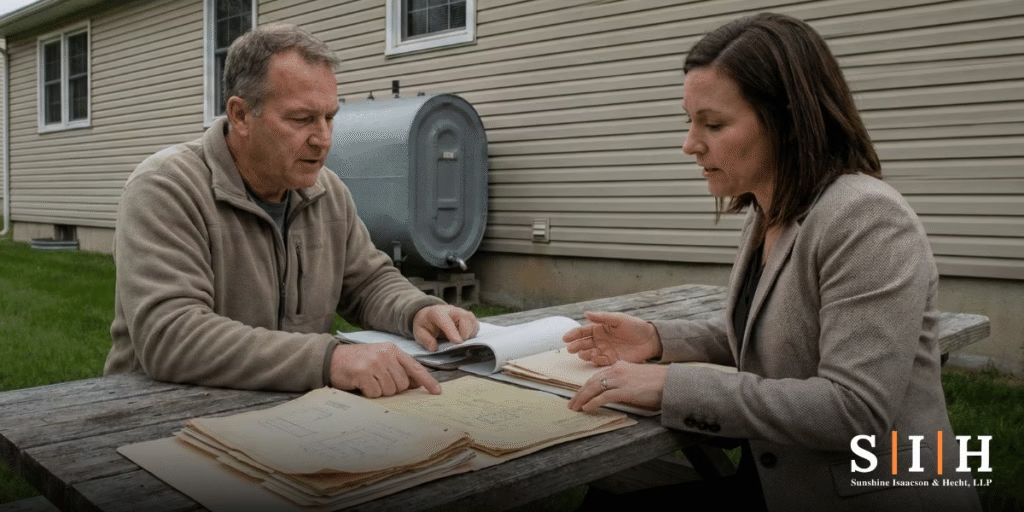
New York’s property disclosure laws generally require sellers to disclose known material defects, and a past oil spill can fall into this category depending on its severity and remediation status. Lenders may also request updated environmental reports before approving a mortgage or refinance on a property with a spill history. Keeping organized records of remediation, DEC correspondence, and any related legal claims can make this process smoother and help avoid delays during a sale or refinance.
What Is Stigma Damage and Can You Recover It?
In real estate and environmental law, the loss in a property’s value that persists even after contamination is fully cleaned up is often referred to as stigma damage. Courts in New York have recognized that a documented oil spill can leave a lasting negative perception among buyers and lenders, separate from the actual cost of remediation. Under the Navigation Law, homeowners may be able to recover this stigma-related loss in value in addition to cleanup costs, provided it can be reasonably documented through appraisals or comparable sales data.
However, that does not mean that you cannot take legal action against the oil company!
Preventing Oil Spills in New York City Homes
The most economical approach is usually prevention. This is not always perfect because the oil company may still cause a spill when they fill your tank. However, in case they try to blame it on you, you the homeowner can take steps to prevent this. Maintain your system:
Practical Prevention Steps
- Check oil tanks and lines on a regular basis
- Replace old or worn-out equipment
- Replacement of old piping and valves
- Monitor for odors or staining
- Fix small leaks as soon as possible
Preventive action will not only minimize the Risk of Oil Spills but will also calm buyers. Further, if there is a spill, it will reduce the ability for the oil company to try and blame you for it.
In the competitive real estate market of New York, environmental issues can easily devalue the property. Early intervention in dealing with oil-related risks assists in preserving marketability, lessening legal risk, and retaining bargaining power.
Houses that have records on maintenance and timely remediation are in a better position to stand the test of time and close without difficulties.
Suggested: Calculating Damages and Costs After an Oil Spill in NY
Protect Your Property Value After an Oil Spill
If an oil spill has affected your home, don’t wait to find out whether it will impact your property’s value — talk to our oil spill lawyers about recovering cleanup costs, damages, and lost value from the responsible party. Contact us or call (516) 352-2100 for a free consultation.
Final Thoughts
Oil spills may have a great effect on the value of your home: buyer confidence and long-term perception of property can be significantly impacted. The after-effects can be long-lasting beyond the cleanup expenses and affect the perception of a property in the long term.
Homeowners can also ensure their investment as well as their right to sell or refine without hassle by being aware of specific risks and preventing them.
FAQ
Will the government intervene following an oil spill?
Yes. Spills that pose a risk to public health, water supplies, or the environment are typically investigated by the New York State Department of Environmental Conservation (DEC), and local health departments may also get involved depending on the severity.
Is there a record of my oil spill?
Generally, yes. Once a spill is reported to the DEC, it’s logged and can become part of the property’s environmental record, which may surface later during a sale, refinance, or inspection.
What legal options do homeowners have after an oil spill?
Under New York’s Navigation Law, homeowners can generally pursue the responsible party for cleanup costs, property damage, temporary housing expenses, and in some cases, loss of property value — without having to prove negligence.
Will remediation completely restore my property value?
Not always. Remediation addresses the physical contamination, but a documented spill can remain part of the property’s history and still affect buyer perception, appraisals, and negotiating leverage years later.
Is finding oil on your property always a bad sign for resale?
It’s a setback, not necessarily a dealbreaker. Prompt reporting, professional remediation, and a clear paper trail all help limit the long-term impact — and if someone else caused the spill, you may be entitled to recover the loss in value from them.
What should a homeowner do in case of oil contamination?
Evacuate the affected area, avoid contact with the oil, report the spill to the DEC and the responsible party, document everything with photos, and speak with an attorney before signing anything from the oil company or its insurer.
When should I contact an attorney after an oil spill?
You should contact an Oil Spill Attorney as soon as possible. Early legal involvement can help protect your rights, ensure proper documentation, and prevent you from being unfairly blamed or paying unnecessary costs.
How long does an oil spill stay on a property's public record in New York?
Once reported to the DEC, a spill is generally logged permanently as part of the property’s environmental history, even after remediation is complete. Buyers, lenders, and inspectors may access this record indefinitely, which is why proper legal handling and documentation at the time of the spill matters for the long term.
What should I do if I found oil on my property?
Stay clear of the area, avoid direct contact with the oil, and report it immediately to the DEC Spill Hotline and the likely responsible party. Take photos before cleanup begins, and consult an attorney before agreeing to anything with the oil company or its insurer.
What should I do if I found oil on my property?
Stay clear of the area, avoid direct contact with the oil, and report it immediately to the DEC Spill Hotline and the likely responsible party. Take photos before cleanup begins, and consult an attorney before agreeing to anything with the oil company or its insurer.


