What to Do After an Oil Spill on You Property: Cleanup, Insurance, and Legal Steps

oil spill cleanup on your property

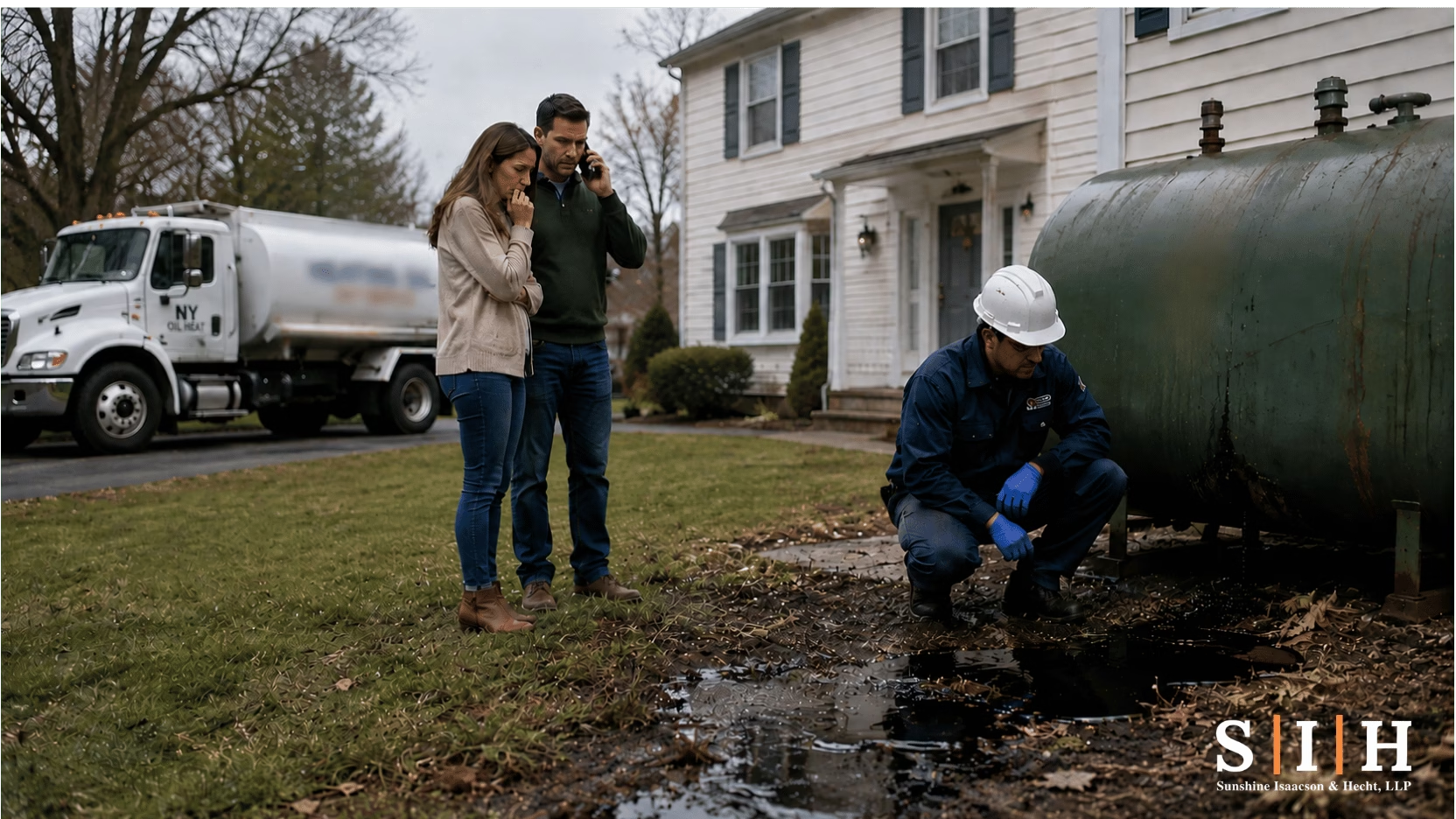
Discovering an oil spill on your property calls for a specific sequence of steps: ensure safety, contact the right authorities, arrange professional cleanup, document everything, notify your insurer, and understand who may be responsible before agreeing to a settlement. 

This guide walks through the full process; from the moment you notice fumes or staining to the point where legal help may become necessary. 

Immediate Response: What to Do the Moment You Discover a Spill

Your first priority is safety, not cleanup. 

Watch for Warning Signs and Ventilate 

  • Open windows and doors to ventilate the space.  
  • Leave the area if the smell is overwhelming.  
  • Move away if you feel lightheaded or nauseated.  
  • Treat strong or persistent fumes as a reason for professional evaluation.  
  • Avoid smoking, candles, or anything that could create a spark nearby. 

Stop the Source, But Only If It’s Safe 

If you can safely reach the shutoff valve for the oil supply or the emergency switch for your furnace or boiler, turning it off may help stop the release. 

Do not attempt this if it means entering a heavily contaminated or poorly ventilated space. Wait for a professional if there is any doubt. 

Contact Emergency and Environmental Authorities 

Call your local fire department or 911 if there is any immediate danger to health or safety. 

Many jurisdictions also require reporting to a state environmental agency once a spill exceeds a certain size or reaches groundwater, a drinking water source, or a waterway. Reporting thresholds vary by location, so confirm the rules that apply rather than assuming a spill is too small to matter. Early reporting often works in the property owner’s favor, since it creates an official record and can qualify for state cleanup fund programs where they exist. 

What Not to Do While Waiting for Help 

A few common instincts can actually make a spill worse: 

  • Do not use water to rinse away spilled oil, since this typically spreads contamination rather than removing it 
  • Do not dispose of contaminated soil or debris in household trash 
  • Do not attempt a full cleanup on your own 

If it is safe to do so, placing absorbent material such as sand around the perimeter of the spill can help limit its spread until professionals arrive. 

Reporting and Bringing in Professional Cleanup 

Oil spills are rarely limited to what is visible on the surface. Petroleum can migrate through soil and reach groundwater long after the release appears to have stopped. 

For this reason, a licensed environmental contractor should assess the site before anyone assumes the situation is under control. 

What a Professional Assessment Covers 

A qualified environmental professional will typically: 

  • Determine how far contamination has spread, above and below the surface 
  • Identify whether groundwater has been affected 
  • Recommend a cleanup plan suited to the size and location of the spill 
  • Handle any required regulatory reporting on your behalf 

The Oil Spill Cleanup and Remediation Process

Professional cleanup typically moves through three general phases. 

Phase 1: Inspection and Testing 

Soil and groundwater samples may be collected to determine how far contamination has traveled. The results of this testing guide the scope of the cleanup plan that follows. 

Phase 2: Cleanup and Remediation 

Depending on what testing reveals, cleanup may involve: 

  • Excavating and removing contaminated soil 
  • Repairing or replacing a leaking tank 
  • Cleaning or repairing affected structural areas, such as basement walls and flooring 
  • Installing groundwater monitoring wells 
  • Ongoing monitoring and periodic retesting to confirm contamination has dropped to acceptable levels 

Phase 3: Why “Looks Clean” Doesn’t Mean “Fully Resolved” 

A property owner should not assume a spill is fully resolved simply because visible oil has been cleaned up and the odor has faded. 

Subsurface contamination can persist even when the surface looks clean. Closing out a case properly usually requires documentation confirming that regulatory cleanup standards have actually been met. Keep every inspection report, lab result, and closure letter, since these records matter for insurance claims, legal claims, and any future sale of the property. 

Documenting the Spill: What to Photograph and Keep 

Good documentation created early can make the difference between a smooth insurance claim and a disputed one. 

What to Photograph 

As soon as it is safely possible, photograph: 

  • The spill area itself 
  • Any visible staining or damaged flooring, walls, or belongings 
  • Progress throughout the cleanup process, not just the beginning 

What Records to Keep 

Alongside photographs, gather and preserve: 

  • Information about the oil tank or heating system, including its age, installation date, and maintenance history 
  • Fuel delivery receipts and the name of the delivery company, if a delivery is connected to the spill 
  • All communications with contractors, environmental consultants, and the insurance company 
  • Invoices, estimates, and reports from cleanup contractors 
  • Any incident or case number assigned by a fire department or environmental agency 
  • A copy of your homeowner’s insurance policy, including any endorsements related to oil or pollution coverage 

This record keeping is useful even for property owners who never need legal help, since it supports a stronger insurance claim and protects the owner if a dispute arises later. Our guide on tracking spill-related expenses walks through this process in more detail. 

Insurance After an Oil Spill 

Contacting your insurance company promptly after a spill is important, since most policies require timely notice of a loss. What is not automatic, however, is coverage itself. 

How Coverage Can Vary 

  • Many standard homeowners policies exclude pollution-related losses outright 
  • Some provide limited coverage or require a separate endorsement for oil tank or heating system leaks 
  • Insurers often distinguish between a sudden, one-time release and a gradual leak, since gradual leaks are more often tied to a maintenance issue that falls outside standard coverage 
  • Deductibles, coverage limits, and specific exclusions can all affect what is actually paid out 

Reviewing the actual policy language, including any riders or endorsements, is the only reliable way to know what applies to your situation. 

Communicating With Your Insurer 

When speaking with an adjuster, stick to factual descriptions of what happened and avoid speculating fault. Keep a written log of every conversation, including the date, the representative’s name, and what was discussed. 

If a Claim Is Denied, Delayed, or Undervalued 

Request the denial or valuation in writing, and ask the insurer to identify the specific policy language it relied upon. Keep copies of all correspondence in case the claim needs to be challenged later. 

Homeowners who want to understand whether their policy includes relevant coverage before a spill happens should review this related post. 

Who May Be Responsible: Understanding Liability

Who May Be Responsible

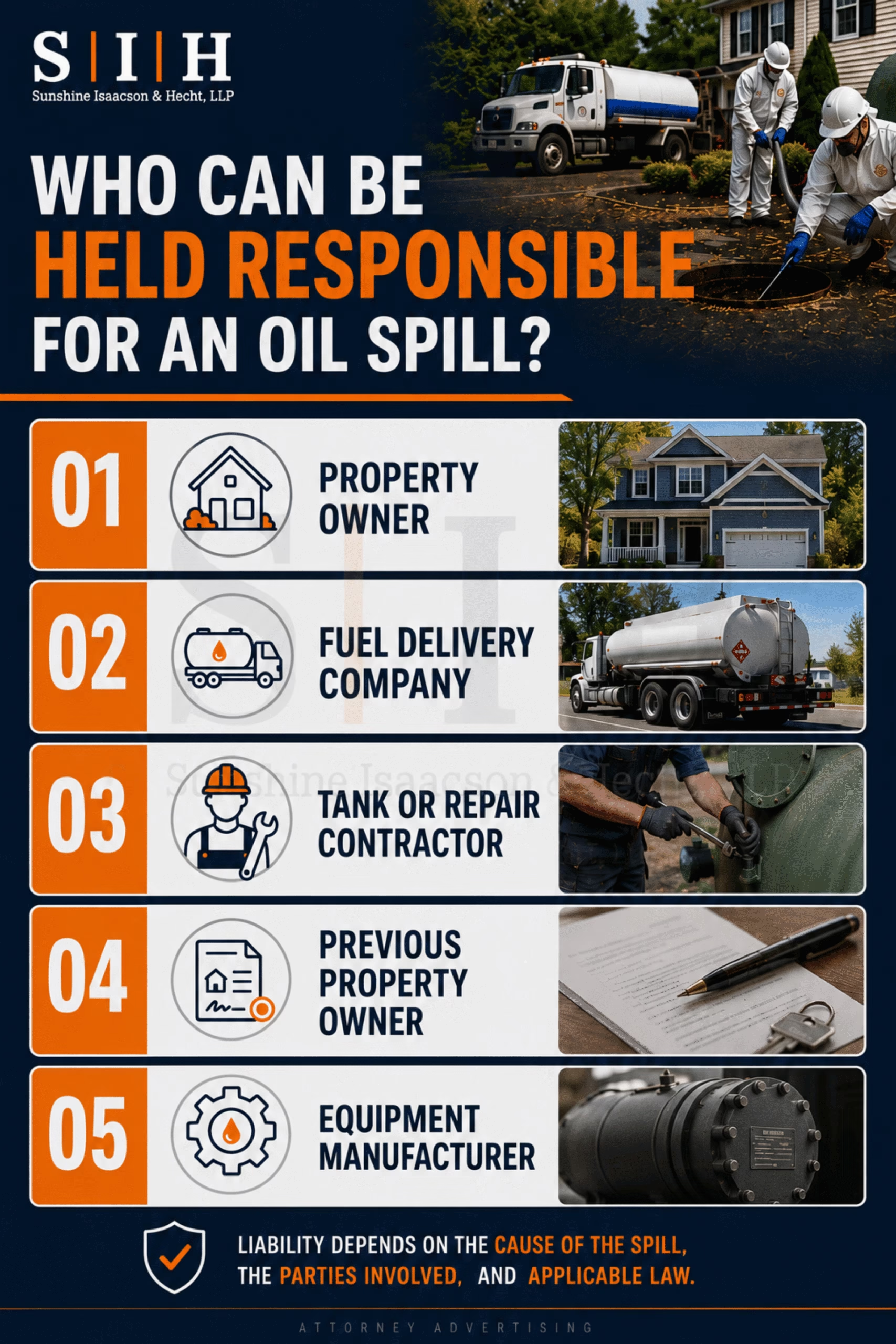
Liability after an oil spill is rarely automatic and often depends on a combination of facts rather than a single obvious cause. More than one party can share responsibility depending on the circumstances. 

Factors That Can Affect Liability 

  • Who owned or controlled the tank or equipment involved 
  • Whether the equipment was properly maintained or inspected 
  • How and when the equipment was installed 
  • Whether a fuel delivery company made an error during delivery 
  • Whether a contractor’s work contributed to the failure 
  • Whether a defect in the tank or related equipment played a role 
  • Actions or omissions of a prior property owner 
  • Applicable contracts, lease terms, or state and local law 

Why the Property’s History Matters 

A spill traced to equipment installed or maintained by a previous owner may raise different questions than one caused by a recent delivery mistake. 

Since liability is fact-specific, avoid assuming any single party, including yourself, is automatically at fault before a proper investigation takes place. Our related post on liability explains how responsibility is typically evaluated in these cases. 

Legal Options for Property Owners 

Depending on the circumstances, a property owner facing significant spill-related losses may have more than one path toward recovery. 

Possible Avenues, Depending on the Facts 

  • Pursuing a claim through your own insurance policy 
  • Negotiating directly with a fuel delivery company, contractor, or other potentially responsible party 
  • Participating in an applicable state administrative or regulatory process 
  • Pursuing a civil claim where warranted 

No single remedy applies to every situation. The availability of any particular option depends on the facts of the spill, the applicable law, and the evidence available. 

When Legal Guidance Becomes Useful 

Legal guidance tends to become genuinely useful, rather than simply an added expense, when: 

  • Liability is disputed among multiple parties 
  • An insurance claim has been denied or significantly undervalued 
  • Cleanup and remediation costs are substantial 
  • Negotiations with a responsible party have stalled 

SIH Attorneys represents property owners dealing with oil spill cleanup, insurance, and liability disputes. Our oil spill attorneys can review your case and explain your legal options. 

Potential Losses and Damages 

The financial impact of an oil spill often extends well beyond the cleanup invoice. 

What May Be Recoverable 

Depending on the facts and applicable law, recoverable losses may include: 

  • Remediation and cleanup costs 
  • Soil and groundwater testing and inspection fees 
  • Repair of damaged flooring, walls, or foundations 
  • Replacement of contaminated personal property 
  • Temporary relocation expenses if the home becomes uninhabitable during cleanup 
  • Diminished property value, where that type of loss is legally recognized 

What is actually recoverable depends on the specific facts, applicable law, insurance coverage, causation, and the evidence preserved. This is why documentation matters so much from the start. 

When to Reach Out for Legal Guidance

 oil spill attorney

  • Not every oil spill requires an attorney. A minor spill with a clear cause and straightforward insurance claim may be resolved without legal assistance. However, legal guidance can be helpful when: 
  • The cause of the spill is unclear or disputed  
  • An insurance claim is denied or undervalued  
  • Cleanup and remediation costs are substantial  
  • Multiple parties may share responsibility  

What to Bring to a Consultation 

  • Organizing your records can help an oil spill attorney evaluate your situation more efficiently. Bring: 
  • Photos and inspection or lab reports  
  • Tank, equipment, and fuel delivery records  
  • Insurance correspondence and policy documents  
  • Cleanup invoices, estimates, and related expenses  
  • These records can help establish the cause, extent of the damage, and potential costs involved. 

Talk to SIH Attorneys About Your Oil Spill 

Dealing with cleanup costs, a disputed insurance claim, or unclear liability after an oil spill can be overwhelming. SIH Attorneys, serving property owners across New York and Connecticut, helps clients understand their legal options, protect important evidence, and pursue the recovery they may be entitled to. If you’re facing an oil spill and aren’t sure what to do next, contact our oil spill attorneys to discuss your situation and legal options. 

FAQ

Prioritize safety before anything else. Ventilate the area, avoid ignition sources, leave if fumes are strong, and contact your local fire department or environmental agency to report the spill. 

No. Coverage depends on the specific policy, whether the release was sudden or gradual, and whether the policy includes exclusions or endorsements related to pollution. Reviewing your actual policy language is the only way to know what applies. 

Minor containment steps, such as placing absorbent material around a spill, can be appropriate while waiting for help, but full cleanup and remediation should be handled by a licensed environmental professional, since improper handling can spread contamination and create additional liability. 

Responsibility can depend on who owned or maintained the tank, whether a delivery error occurred, contractor involvement, and other case-specific facts. Liability is not automatically assigned to any single party. 

Photograph the spill and any damage throughout cleanup, and keep tank and maintenance records, delivery receipts, insurance correspondence, contractor invoices, and any official incident number. 

Consider legal guidance when liability is disputed, an insurance claim is denied or undervalued, cleanup costs are significant, or multiple parties may share responsibility for the spill. 

Scroll to Top
CALL NOW