
How to Document Oil Spill Expenses and Build a Strong Claim
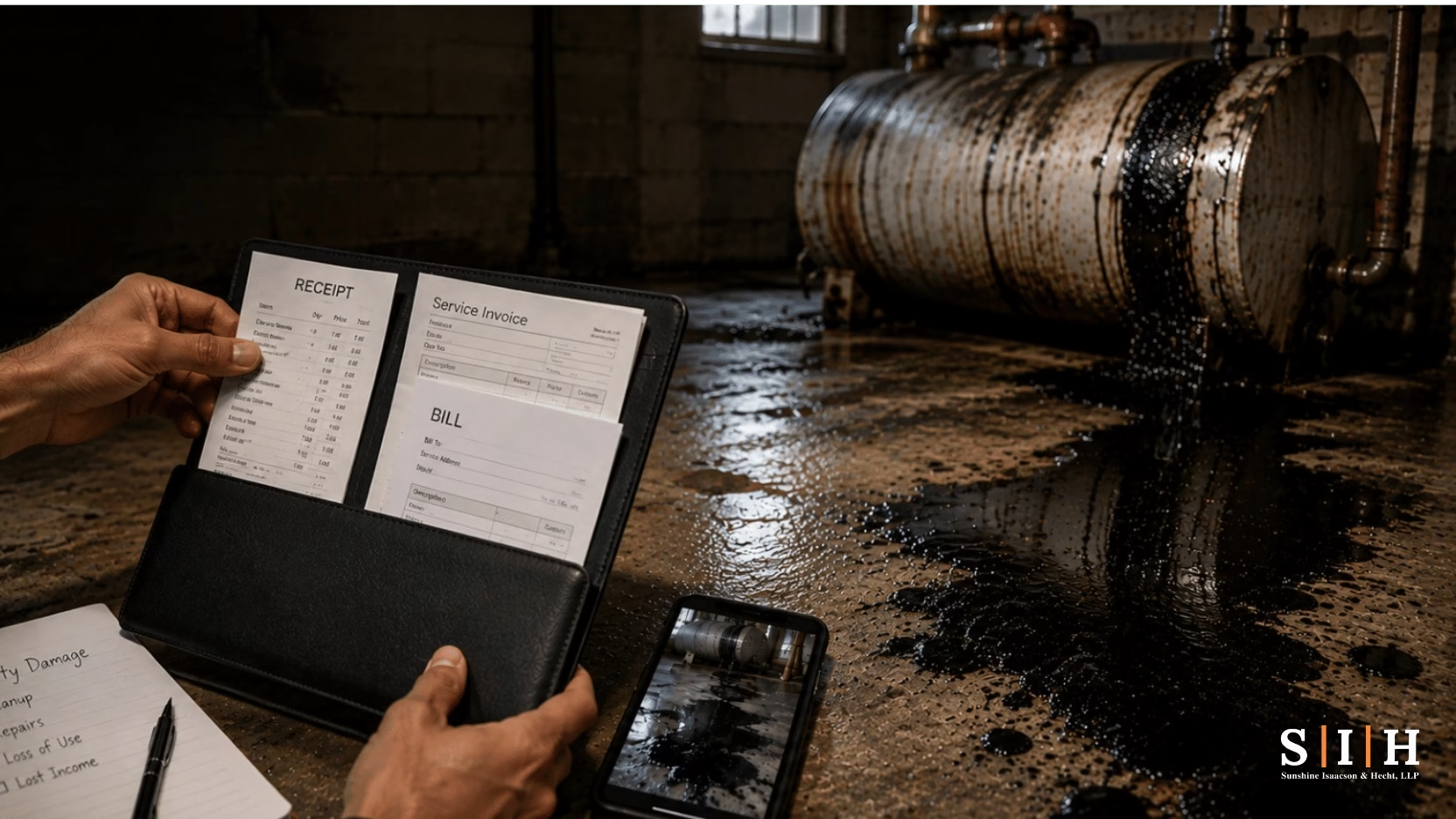
An oil spill on your property does not just create a mess. It creates a financial burden that can run into tens of thousands of dollars once cleanup, testing, repairs, and lost time are added up. In most jurisdictions, the party responsible for a petroleum discharge can be held liable for the resulting cleanup costs and damages. That means you likely have a legal right to recover what the spill costs you. But that right only translates into an actual payout if you can prove it.
This guide breaks down exactly how to document oil spill expenses and turn that documentation into a strong, defensible claim, whether you are dealing with an insurance adjuster, the responsible oil company, or preparing litigation.
Why Documentation Makes or Breaks an Oil Spill Claim
Every dollar you recover after an oil spill depends on evidence. Adjusters and opposing counsel do not take your word for what happened. They evaluate a claim based on what can be verified: dated photographs, itemized invoices, written estimates, and records that tie each expense directly to the spill.
A claim built on scattered receipts and vague memory is far easier to dispute or undervalue. A claim built on a complete, organized record is far harder to argue with. This is true whether your case settles through negotiation or ends up in front of a judge. The strength of your evidence, not just the size of your losses, often determines the size of your recovery.
Understanding the Legal Basis for an Oil Spill Claim
Reporting Requirements Vary, but Speed Always Matters
Most jurisdictions require petroleum spills to be reported quickly, often within a matter of hours, once a spill exceeds a small quantity or reaches soil or water. Exact thresholds and reporting windows differ from state to state, so it is worth confirming the specific rule where you live. What does not change is this: reporting the spill promptly to your local environmental agency, fire department, or oil company creates an official record and often an incident or spill tracking number. That number becomes the anchor for your entire claim, since it links every expense, you incur back to a documented event.
Liability Generally Falls on the Responsible Party
In many states, environmental and pollution liability laws hold the party who caused a petroleum discharge responsible for cleanup and removal costs, along with direct damages, often without requiring you to prove negligence in the traditional sense. This means the central issue in most claims is not fault; it is documentation. Understanding who is typically responsible for covering spill cleanup costs helps clarify why a well-organized paper trail carries so much weight when a claim is being evaluated.
Step-by-Step: Documenting Oil Spill Expenses the Right Way
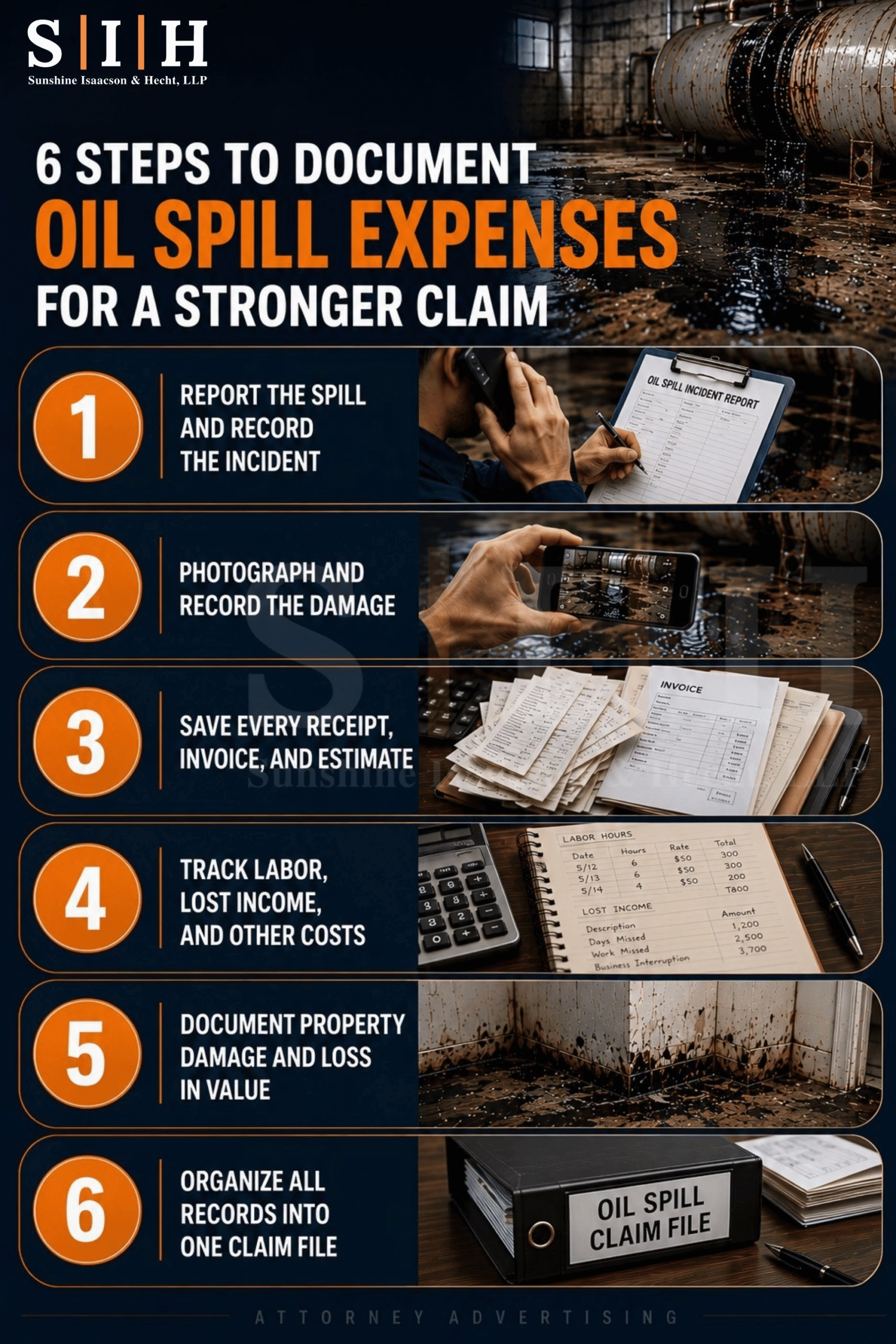
1. Report the Spill and Secure an Incident Number
This is the starting point of your paperwork. Contact your oil company or the appropriate environmental agency as soon as you discover the spill, and write down the date, time, and any incident or spill number you are given. Knowing the immediate steps to take when you first spot a spill can prevent early missteps that weaken a claim before it even begins.
2. Photograph and Video Everything, at Every Stage
- Visual evidence carries significant weight because it is difficult to dispute. Capture:
- The spill’s origin point and the extent of visible contamination
- Damaged flooring, walls, insulation, or personal belongings
- Equipment used during containment and remediation
- Before-and-after images once cleanup is complete
Make sure your phone date and location settings are enabled, so photos and videos are automatically timestamped. Never discard a damaged item before it has been fully photographed. Once it is gone, that piece of evidence is gone with it.
3. Keep Every Receipt, Invoice, and Written Estimate
- Save documentation for every cost connected to the spill, including:
- Environmental contractor and remediation invoices
- Soil and groundwater testing and lab fees
- Equipment rentals such as pumps, containment booms, or absorbents
- Disposal fees for contaminated soil or materials
- Temporary housing costs if the property becomes unsafe to occupy
Get written estimates from licensed contractors or environmental consultants before approving major work. A verbal quote is not documentation. Paying a contractor in cash without an invoice creates a gap in your record that is difficult to fix later.
4. Log Labor, Time, and Personal Costs
Personal time spent on containment and mitigation has real value and is often reimbursable, but only if it is recorded properly. A usable time log includes the date, start and end time, who performed the work, the specific task completed, and any related material costs. This also applies to lost wages if you had to miss work to deal with the spill.
5. Document the Financial Impact on Your Property
If the spill affects your property’s value, a written appraisal or contractor assessment strengthens that portion of your claim considerably. Comparing financial records from before and after the incident, alongside a clear breakdown of how total damages and costs are typically calculated, gives you a defensible basis for property devaluation claims rather than a rough estimate. There are experts in the real estate field that can value the difference in your property value the day before, and then after, the oil spill. That decrease in value is part of your claim.
6. Build a Master Expense File
Once receipts, time logs, photos, and estimates are collected, consolidate them into a single organized file. A spreadsheet with columns for date, vendor, description, category, and amount makes your claim easy to review and hard to challenge. This single habit is often what separates a claim that resolves smoothly from one that drags on for months.
What Separates a Strong Claim from a Merely Documented One
Keeping receipts is necessary, but it is not sufficient on its own. A genuinely strong claim also has:
- Consistency between records. Dates on invoices, photos, and your time log should be aligned. Gaps or contradictions invite scrutiny.
- Independent verification. Third-party estimates, lab results, and licensed contractor assessments carry more weight than self-reported costs because they are harder to dispute.
- A preserved chain of evidence. If the oil company or its representatives ask to remove your oil tank, do not agree to it before consulting an attorney. The tank itself can be important physical evidence in a contested claim.
- No unexplained delays. A long gap between discovering the spill and reporting it, or between an expense occurring and it being documented, can be used to question the legitimacy of a cost.
Common Documentation Mistakes That Weaken Oil Spill Claims
Even careful property owners make avoidable errors that reduce what they eventually recover:
- Throwing away damaged items
- Allowing the oil company to remove the tank before your own expert examines it
- Paying for labor or materials in cash without a receipt
- Waiting days or weeks to report the spill
- Treating verbal estimates as if they were formal documentation
- Forgetting to log incidental costs such as meals, fuel for generators, or hotel stays
Any one of these mistakes can create a hole in your claim that an adjuster or opposing party will use to argue for a lower payout.
How Strong Documentation Affects Negotiation and Settlement

Insurance adjusters and oil company representatives evaluate claims based on the strength and completeness of the evidence presented, not the severity of your inconvenience. A claim supported by itemized invoices, dated photographs, and a clear expense summary gives the other side less room to dispute individual line items. It also signals that the claimant is prepared to escalate the matter if the offer does not reflect the documented losses, which often results in a more serious initial response during negotiations.
Incomplete documentation, by contrast, tends to invite lowball offers, since unsupported expenses are the easiest items for an adjuster to cut.
When to Bring in an Attorney
You do not need to wait until your claim is denied or disputed to speak with an attorney. Involving legal counsel early can help you avoid documentation mistakes before they happen, ensure your expenses are categorized correctly, and identify losses that property owners commonly overlook, such as diminished property value or lost income. If the responsible party denies liability or disputes the extent of the damages, an experienced oil spill lawyer can gather additional evidence, work with environmental and financial experts, and pursue the claim through negotiation or litigation as needed.
Talk to a Dedicated Oil Spill Attorney
Documenting a spill correctly is only half the battle. If you want a second set of eyes on your claim or need help pushing back on a denial, contact SIH Attorneys for a free consultation with a dedicated attorney who can help you build and protect your case. Our attorneys serve clients throughout New York and Connecticut and can help you understand your legal options and pursue the compensation you may be entitled to.
ATTORNEY ADVERTISING
This blog is provided for general informational purposes only and does not constitute legal advice or create an attorney-client relationship. Legal outcomes depend on the specific facts and circumstances of each matter. Consult SIH Attorneys to discuss your specific legal matter and learn about your legal options.
FAQ
What amount of a spill typically needs to be reported?
Reporting thresholds vary by jurisdiction, but most require immediate reporting once a spill exceeds a small quantity or reaches soil or water. Confirm the exact rule with your local environmental agency.
Who is financially responsible for oil spill cleanup costs?
In many jurisdictions, the party who caused the discharge can be held liable for cleanup and damages, often without the claimant needing to prove traditional negligence.
Can documentation actually increase the amount I recover?
Yes. Well-documented claims are harder to dispute or reduce. Categories like personal labor, lost wages, and property devaluation are far more likely to be paid when properly logged.
Should I get multiple contractor estimates before starting repairs?
Yes, where possible. Estimates from more than one licensed contractor show your costs were reasonable and market-based if the responsible party disputes them later.
What should I do if the oil company disputes my claim or denies liability?
Keep documenting every expense and interaction, and avoid letting anyone remove physical evidence like the oil tank. At this stage, an attorney can help gather additional evidence and push the claim forward.


