
How to Document Every Oil Spill Expense in Nassau & Suffolk?

An oil spill on your property is stressful, messy, and expensive. Whether it is a heating oil leak in your basement or contamination from a nearby tank, the costs can pile up fast. The good news is that under New York’s Navigation Law, the party responsible for the spill can be held liable for your cleanup costs and property damages, plus many other expenses such as the loss of value of your home and legal fees. But there is a catch. You only get reimbursed for what you can prove.
If you live in Nassau or Suffolk County and you are dealing with an oil spill, this guide will walk you through exactly how to document oil spill expenses the right way, so your claim holds up and you recover every dollar you are owed.
Why Documentation Makes or Breaks Your Oil Spill Claim
We need proof of loss. Every receipt, photo, and log you keep becomes evidence that supports your oil spill compensation claim. Without solid records, even a legitimate claim can get reduced or denied outright.
This is especially true on Long Island, where heating oil tanks are common in older homes across Nassau and Suffolk County, and soil and groundwater contamination claims can get complicated quickly. The more organized your paper trail, the stronger your position when negotiating.
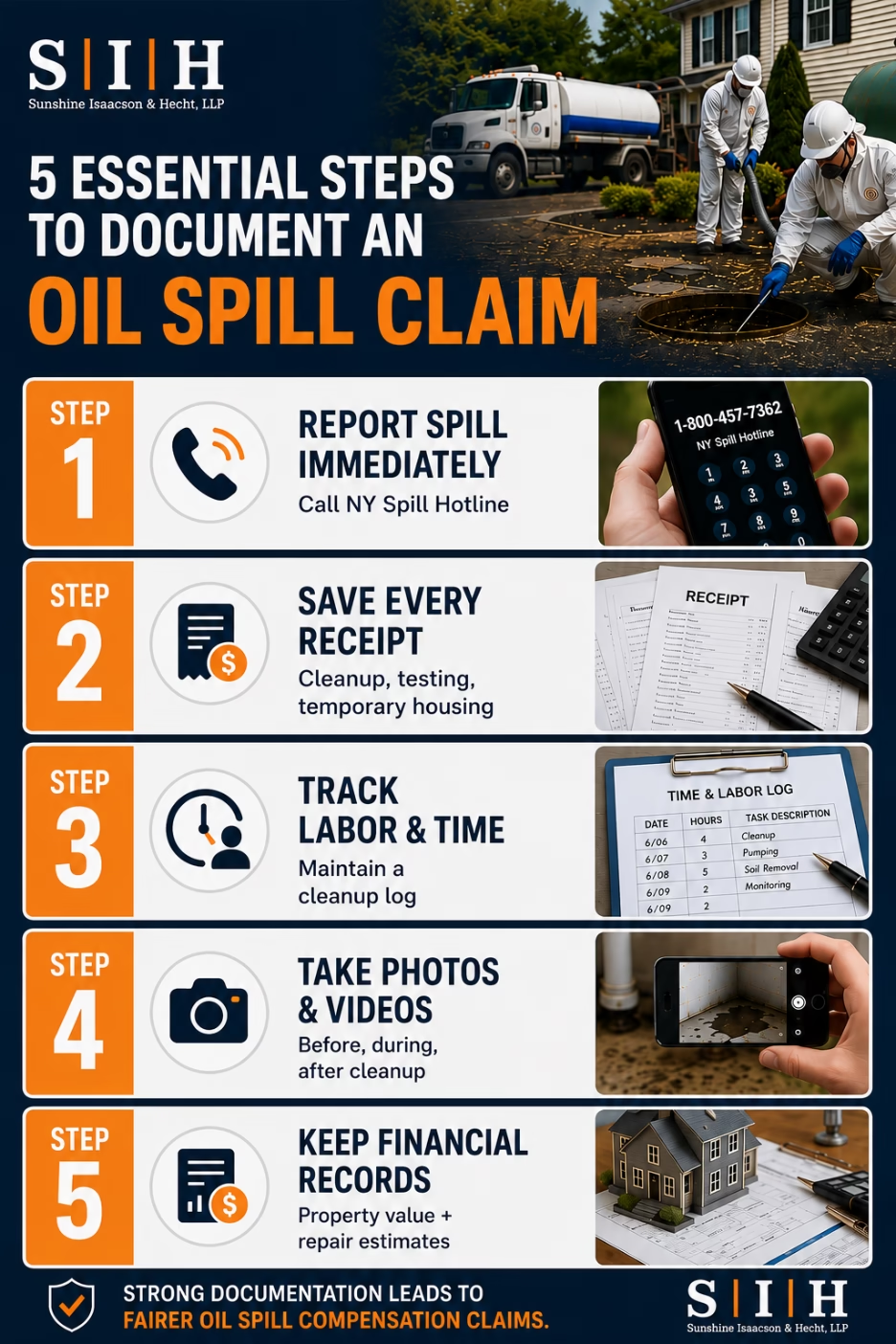
Step 1: Report the Spill Immediately and Save the Confirmation
Before you even think about expenses, report the spill to your oil company immediately. This step is not optional. The oil company will report the spill and create an official spill number that ties every future expense back to a documented incident. Knowing exactly what to do right away if you spot an oil spill in NY in those first few minutes can protect your claim before it even starts.
This becomes the foundation of your oil spill claim documentation going forward.
Step 2: Keep Every Receipt and Invoice
This is the single most important habit to build. Detailed receipts and invoices should be kept for absolutely everything connected to the spill, including:
- Environmental contractor and remediation invoices
- Soil and groundwater testing fees
- Equipment rentals such as pumps, containment booms, or absorbent materials
- Temporary housing if your home becomes unsafe to live in
- Lab analysis and consulting fees
- Disposal fees for contaminated soil or materials
If some of the above seems daunting, call our oil spill lawyer – we can help set you up with our environmental cleanup experts.– we can help set you up with our environmental cleanup experts. Keep both physical and digital copies. A simple folder on your phone or a cloud drive works fine, but make sure nothing gets thrown away or deleted, even small ones like gas station fuel for a generator used during cleanup.
Step 3: Track Time and Labor Costs
Many homeowners forget that time and labor are reimbursable expenses too. If you, a contractor, or even a family member spent hours mitigating the spill, that time has value and should be logged. If you missed work and lost pay, that counts.
Create a simple time log that includes:
- Date and start and end time
- Who performed the work
- What task was completed
- Any related material costs
This is one of the most overlooked parts of a claim, and it can add up to a meaningful portion of your total recovery.
Step 4: Take Photos and Videos at Every Stage
High quality photos and videos of the damage are some of the strongest evidence you can have. Document the spill from the moment you discover it through every stage of cleanup.
Capture:
- The initial spill location and visible contamination
- Damaged flooring, walls, or belongings
- Equipment being used during remediation
- Before and after shots once cleanup is complete
Timestamped photos carry more weight, so make sure your phone’s location and date settings are turned on.
Step 5: Maintain Before and After Financial Records
If the spill affected your property value, a written estimate from a licensed appraiser or contractor strengthens your claim significantly, especially when paired with a proper breakdown of calculating damages and costs after an oil spill in NY. We will help you get a proper appraisal of your home – before and after the spill.
Step 6: Organize Written Estimates and Contractor Quotes
Before hiring anyone for repairs or remediation, get written estimates from multiple contractors when possible.
Step 7: Build a Master Expense File
Once you have receipts, time logs, photos, and estimates, consolidate everything into one organized file. A simple spreadsheet with columns for date, vendor, description, amount, and category makes it easy to hand over to your attorney or submit with your claim. This single step often separates a smooth claim from a drawn out dispute.
Common Mistakes That Hurt Nassau & Suffolk Oil Spill Claims
Even careful homeowners make avoidable mistakes, such as:
- Throwing away damaged items before photographing them
- Letting the oil company take your oil tank away (this is evidence! Don’t give it to them!)
- Paying contractors in cash without an invoice
- Waiting weeks to report the spill
- Assuming verbal estimates count as documentation
- Forgetting to log personal time spent on cleanup, meal expenses if you have to dine out, hotel expenses if the property is not livable, etc.
Avoiding these mistakes from day one puts you in a much stronger position when it comes time to file.
When to Bring in an Attorney

Even careful homeowners make avoidable mistakes, such as:
- Throwing away damaged items before photographing them
- Letting the oil company take your oil tank away (this is evidence! Don’t give it to them!)
- Paying contractors in cash without an invoice
- Waiting weeks to report the spill
- Assuming verbal estimates count as documentation
- Forgetting to log personal time spent on cleanup, meal expenses if you have to dine out, hotel expenses if the property is not livable, etc.
Avoiding these mistakes from day one puts you in a much stronger position when it comes time to file.
Conclusion
Oil spills are disruptive enough without having to fight for the compensation you are entitled to. By keeping detailed receipts, logging time and labor, documenting everything with photos, and organizing your records from day one, you put yourself in the strongest possible position to recover your costs in full.
If you are in Nassau or Suffolk County and dealing with an oil spill on your property, do not navigate this process alone. Contact SIH Attorneys today for a free consultation and let an experienced legal team help you document your claim, deal with the insurance company, and fight for the compensation you deserve.
ATTORNEY ADVERTISING
FAQ
How long do I have to report an oil spill in New York?
Spills must be reported immediately. Delaying the report can complicate your claim later.
What expenses can I recover after an oil spill on my property?
You can typically recover cleanup and remediation costs, equipment rental fees, testing and lab fees, temporary housing costs, contractor labor, and property damage repairs, as long as they are properly documented.
Who pays for oil spill cleanup costs in New York?
The party responsible for the spill is strictly liable.
What should I do before throwing away damaged belongings?
Always photograph and document damaged items before disposal. Once they are gone, you lose valuable evidence that supports your claim.
Do I need receipts for every single expense?
Yes. Receipts and invoices are the backbone of any successful claim. Even small expenses should be documented since they add up and strengthen the overall record.
Can I get reimbursed for time I personally spent on cleanup?
Yes, in many cases personal labor and time spent mitigating the spill can be included in your claim if it is properly logged with dates, hours, and tasks performed.
How long does an oil spill claim take to resolve in Nassau or Suffolk County?
Timelines vary depending on the complexity of contamination, the responsiveness of the responsible party, and how complete your documentation is. Well organized claims tend to move faster.


