
How Much Does an Oil Spill Cost? Understanding Damages and Expenses
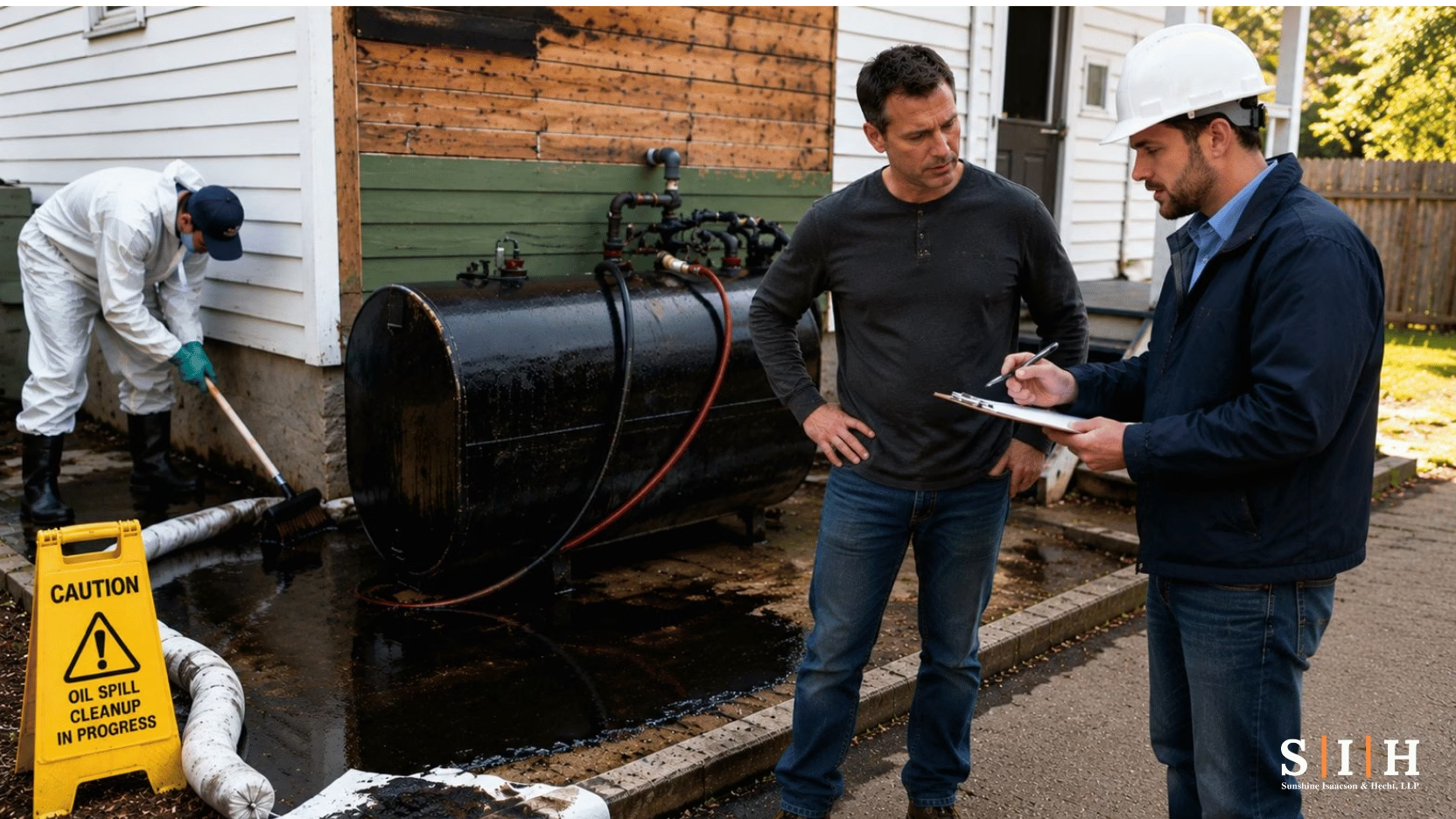
A homeowner who discovers oil leaking from a heating tank into the basement or yard faces an immediate question: what is this actually going to cost, and who’s going to pay for it? The exact number depends heavily on how far the oil traveled and how quickly it was caught, but even a “small” residential spill adds up faster than most people expect.
For a typical residential oil spill, cleanup alone can run from a few thousand dollars for a contained, quickly caught leak to tens of thousands of dollars or more once oil reaches soil, groundwater, or a neighboring property. Add in property repairs, temporary housing, and any loss in resale value, and the total climbs further. Location, how far the oil spread, and how quickly it was addressed matter more to the final bill than the size of the leak itself.
What Actually Drives the Price Tag
Regulators have tried to standardize how spill costs get estimated.
Severity is the biggest lever on the final number:
Spill Severity | What’s Typically Involved | Estimated Cleanup Cost |
Minor, contained to a small surface area | Absorbent cleanup, minor excavation needed | Low thousands of dollars |
Reaches soil | Excavation, disposal, and follow-up monitoring | Tens of thousands of dollars |
Reaches groundwater, a well, or a neighboring property | Extended monitoring, stricter agency standards, potential legal costs | Tens of thousands of dollars, often significantly more |
The Four Cost Categories Behind Every Residential Spill
Whether it’s a five-gallon basement leak or a spill that spreads into the yard, the total bill tends to break into the same categories:
- Cleanup and containment. Excavating contaminated soil, pumping and treating groundwater, ventilating and cleaning affected structures, and disposing of contaminated material.
- Property damage and economic loss. Repairs to your home, decreased value of your home after a publicly reported spill, replacement of damaged belongings, temporary relocation if the home is unsafe to occupy, and diminished resale value that can persist even after cleanup is complete.
- Environmental assessment. Testing soil and groundwater, monitoring wells over time to confirm contamination hasn’t spread, and, if a private well or nearby wetland is affected, confirming it’s safe again.
- Professional and legal costs. Environmental consultants, property appraisers, and legal services may add to the overall expense, particularly when the extent of contamination, property value, or responsibility for the spill is disputed.
Why Two Similar-Sized Spills Can Cost Very Differently
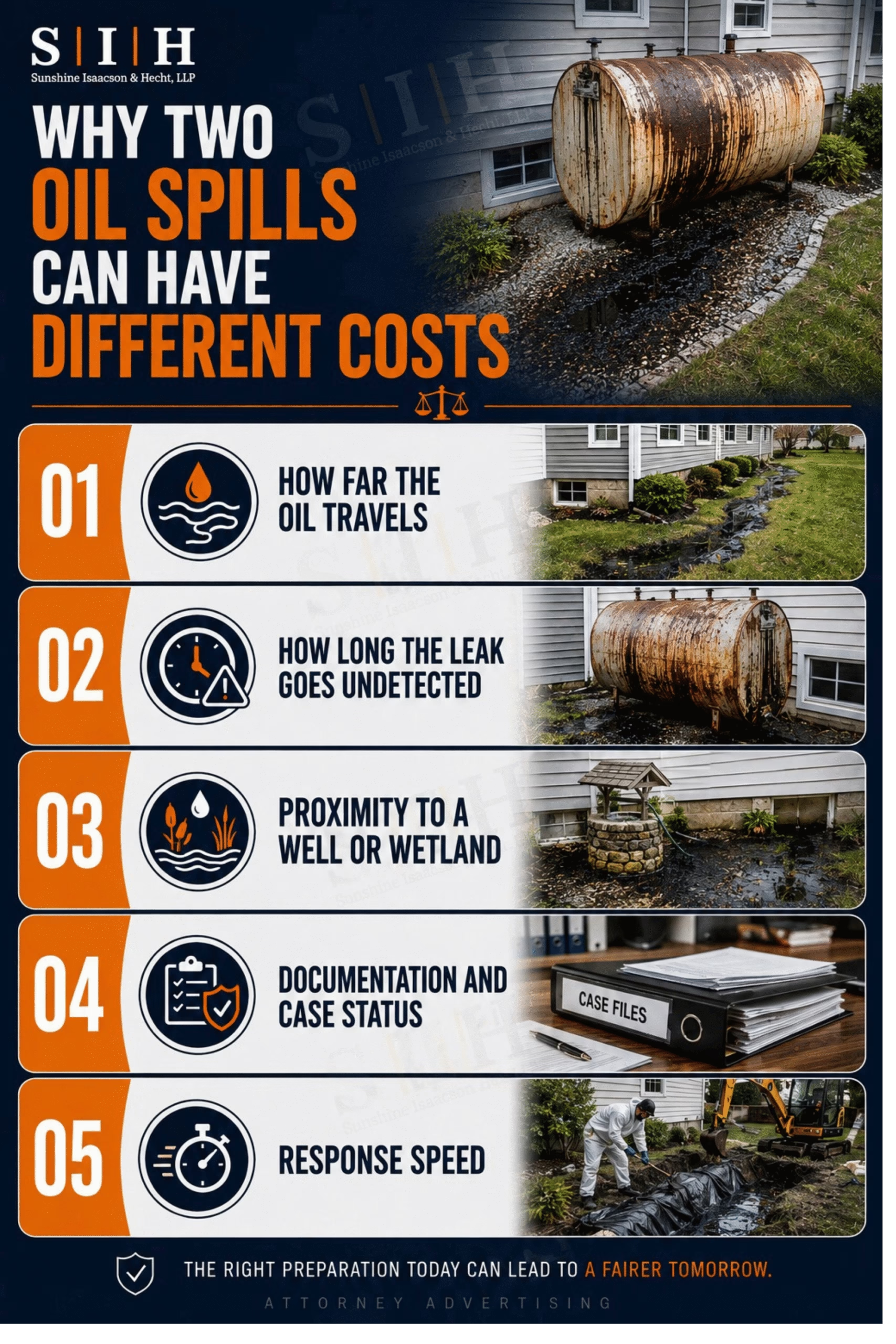
- How far it spread. A spill contained to a small patch of soil costs far less than one that reaches groundwater, a foundation, or a neighboring property line.
- How long it went undetected. Leaks caught within hours or days cost a fraction of ones that ran for weeks or months before anyone noticed, since a slow, hidden leak, common with older heating oil tanks, keeps spreading long after it starts.
- Proximity to a well or wetland. Spills near a drinking water source or protected wetland trigger stricter, more expensive cleanup standards.
- Documentation and case status. A spill with clear records and a formal closure from your state’s environmental agency resolves faster, and costs less, than one left as an open, undocumented case.
- Response speed. The sooner cleanup starts, the smaller the area affected, and the smaller the bill.
Why Catching It Early Pays Off
Long before modern spill disasters made headlines, researchers were already confirming that prevention beats cleanup. A 1986 study in the Journal of Environmental Economics and Management found that, industry-wide, every dollar spent on prevention returned more than a dollar in avoided costs.
The same principle scales down to a single home: catching a heating oil leak early, before it spreads into soil or groundwater, is consistently the difference between a bill in the thousands and one in the tens of thousands. Routine tank inspections, prompt attention to a fuel odor, and quick action at the first sign of a leak are the cheapest insurance a homeowner has against a much larger cleanup later.
A few early warning signs are worth taking seriously:
- A persistent fuel odor in the basement, yard, or near a heating oil tank
- Discolored or dying grass in a patch of the yard for no obvious reason
- An oil sheen on standing water, in a sump pump, or in a nearby ditch
- A tank that’s losing oil faster than your usage would explain
- Rust, dents, or visible wear on an older tank or its fittings
Who Actually Pays for a Residential Oil Spill?
- The responsible party is typically liable first. In many states, whoever caused the spill, often an oil delivery company, tank installer, or service provider, is liable under a strict liability standard, meaning you don’t have to prove they were negligent, only that the spill happened and caused harm.
- Homeowner’s insurance may cover part of the cost, but not always. Many policies exclude gradual leaks or pollution-related damage, so it’s worth checking your policy rather than assuming coverage.
- State spill funds act as a backstop. When the responsible party can’t be identified or won’t pay, many states maintain a fund that covers cleanup costs directly and then pursues reimbursement from the spiller. These funds generally require detailed documentation, receipts, photos, and a clear timeline, before paying out a claim. Our breakdown of who pays for oil spill cleanup and how liability works walks through how this plays out in practice.
Understanding the Different Types of Damages
The categories above describe the total cost of a spill. For an individual homeowner, the damages worth understanding usually narrow down to a shorter list:
- Cleanup and removal costs. What you paid, or are billed for, to remove the contamination and dispose of it properly.
- Property damage. Repairs, replacement of damaged belongings, and diminished market value that can persist even after cleanup is complete.
- Economic losses. Lost wages if a spill forces time off work, plus additional expenses like temporary relocation.
- Environmental testing and remediation. Soil and groundwater testing, and, where applicable, confirming a well or nearby water source is safe again, usually the most complex category to value and one that often requires outside experts.
Not every category applies to every spill, and what’s actually recoverable depends on the liability laws in your state. Our guide to the types of compensation available after an oil spill breaks each of these down in more detail. Because so much of a successful claim depends on paperwork, keeping thorough records from day one matters more than most people expect. Our resource on documenting and tracking oil spill expenses covers exactly what to save and how.
The Role an Attorney Plays in Calculating Your Damages

Cleanup invoices are the easy part. Putting an accurate number on lost property value, lost income, or environmental testing costs is harder, and it usually takes more than one type of expert to work together. Environmental consultants assess contamination and confirm what cleanup actually requires. Property appraisers estimate value before and after the spill to support a diminished-value claim.
An experienced oil spill attorney typically coordinates that whole team. They can advise you on which categories of damage the law allows you to claim, help you gather and organize the documentation each expert needs, and present the finished claim to the responsible party, their insurer, or a state compensation fund in a way that’s clear and hard to dispute. Understanding how these costs are calculated is one thing. Recovering them, in full, is another.
Get Legal Guidance After an Oil Spill
Oil spill costs can quickly become overwhelming, especially when cleanup, property damage, environmental testing, and other expenses are involved. SIH Attorneys helps clients understand their legal options, document their losses, and pursue compensation when another party may be responsible for the damage.
If you are dealing with an oil spill, our attorneys serve clients throughout New York and Connecticut. Contact SIH Attorneys to discuss your situation and understand your options.
ATTORNEY ADVERTISING
FAQ
How much does a small residential oil spill cost to clean up?
It depends on how far the oil traveled. A minor spill contained to a small surface area often runs in the low thousands of dollars. Once oil reaches soil, groundwater, or a nearby waterway, excavation, monitoring, and disposal can push costs into the tens of thousands or more, which is why an early professional assessment matters.
Does homeowner's insurance cover oil spill cleanup?
Sometimes, but not always. Many homeowner’s policies exclude gradual leaks or pollution-related damage, even when the same policy covers sudden, accidental events. It’s worth reviewing your specific policy language rather than assuming a leak is automatically covered.
Why do small spills sometimes cost more per gallon than larger ones?
Mobilizing a cleanup crew and containment equipment costs roughly the same whether the spill is small or large. That fixed overhead gets spread across far fewer gallons in a small residential incident, which is part of why a modest leak can carry a surprisingly high per-gallon price tag.
Can I recover money for lost property value, not just cleanup costs?
In many jurisdictions, yes. Diminished market value is often a separate, recoverable category of damages from the cleanup itself, though it typically requires supporting evidence such as an appraisal.
What should I do first if I discover an oil leak at home?
Stop the source if you can do so safely, avoid disturbing the affected soil or digging it up yourself, and report it to your state’s environmental agency as soon as possible. Our guide on what to do right away if you spot an oil spill walks through the first steps in more detail.
Can I clean up a small oil spill myself to save money?
For a genuinely minor, contained surface spill, absorbent materials can help in the first few minutes. But once oil has soaked into soil, wood, or concrete, DIY cleanup rarely meets the standard your state’s environmental agency requires to formally close the case, and an incomplete cleanup can end up costing more once it’s redone properly.


