Equitable Distribution in Divorce: Dividing Property, Assets, and Debts

Divorce forces couples to untangle years, sometimes decades, of shared financial life. Homes, retirement accounts, credit card balances, and even family businesses all have to be sorted out and divided. This process is governed by a legal principle known as equitable distribution; the rule most states use to decide who gets what when a marriage ends.
Equitable distribution means marital property, and marital debts are divided fairly between spouses, not necessarily equally. Courts weigh each spouse’s income, contributions to the marriage, and future financial needs to reach a division that reflects fairness rather than a strict fifty-fifty split. Understanding how equitable distribution works can help you protect your financial future and prepare for what comes next.
What is Equitable Distribution?
Equitable distribution is the legal framework courts use to divide marital property and marital debt during a divorce. “Equitable” does not automatically mean “equal.” Instead, a judge looks at the full financial picture of the marriage and divides assets and debts in a way that is fair given each spouse’s circumstances.
This differs from community property states, where marital assets are generally split fifty-fifty regardless of individual contributions. Most states, including New York, follow equitable distribution instead, giving courts more flexibility to account for real differences in income, health, and future earning potential between spouses.
Marital Property vs. Separate Property
Before anything can be divided, it has to be classified. This is one of the most important, and often most contested, steps in a divorce. The following classifications are based on New York law, but many states are similar:
What Counts as Marital Property
Marital property includes almost anything acquired by either spouse during the marriage, regardless of whose name is on the title. Common examples include:
- The marital home and any other real estate purchased during the marriage
- Retirement accounts, pensions, and 401(k) contributions made during the marriage
- Income, bonuses, and business interests earned during the marriage
- Vehicles, furniture, and other personal property acquired together
- Credit card balances, personal loans, and other debts incurred during the marriage
What Counts as Separate Property
Separate property generally stays with the spouse who owns it and is not subject to division. This typically includes:
- Assets owned before the marriage
- Gifts or inheritances received by one spouse individually, even during the marriage
- Personal injury settlement proceeds, other than compensation for lost wages
- Property specifically defined as separate in a valid prenuptial or postnuptial agreement
When Separate Property Becomes Marital Property
Separate property can lose its protected status if it becomes commingled with marital assets. For example, depositing an inheritance into a joint bank account or using premarital funds to renovate the marital home can convert what was once separate property into marital property, or at least create a marital interest in it. Keeping clear records and separate accounts is one of the simplest ways to protect these assets.
How the Equitable Distribution Process Works
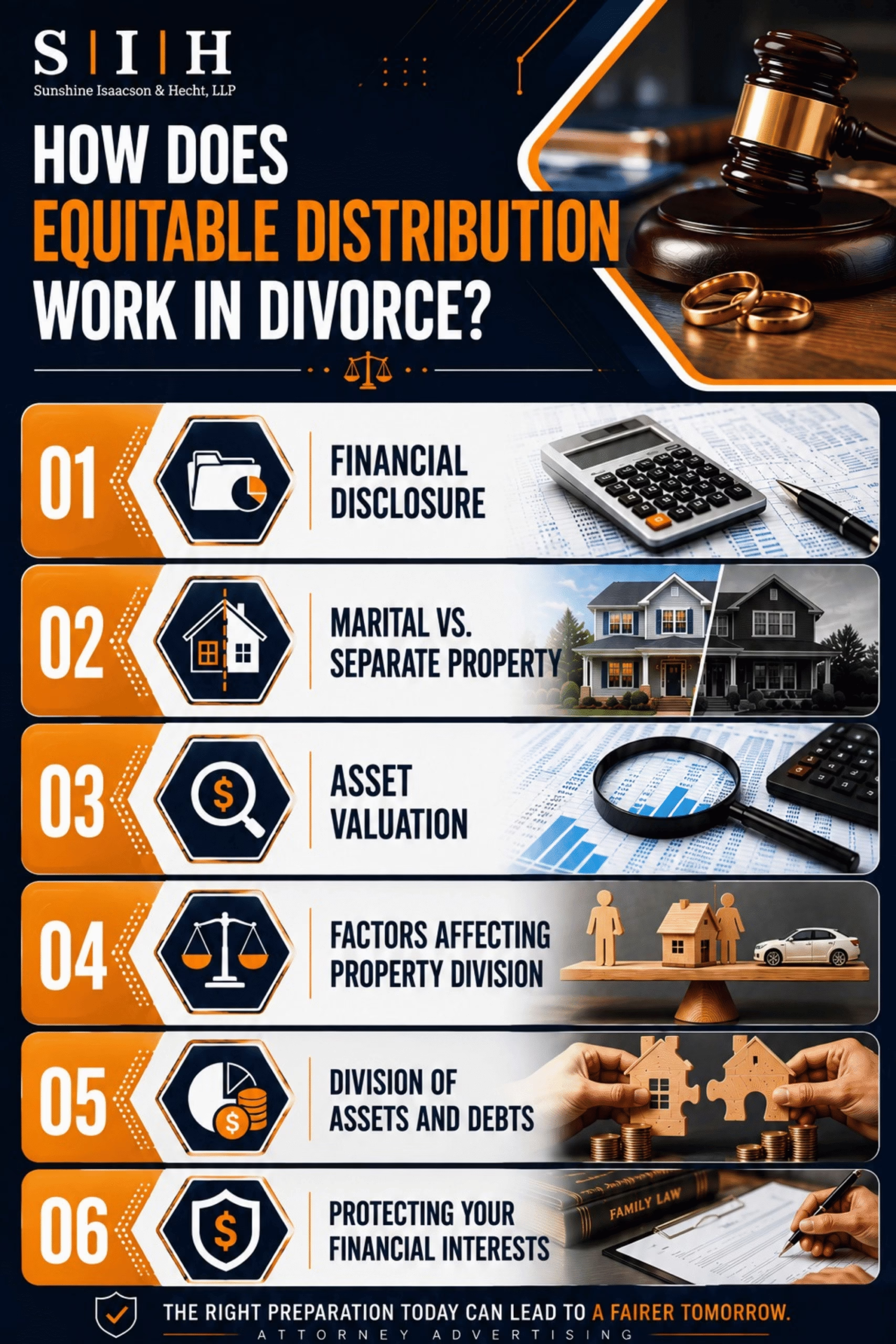
Full financial disclosure. Both spouses are legally required to disclose their income, assets, and debts, usually through a sworn financial statement. Hiding assets at this stage can lead to sanctions and an unfavorable ruling.
Classifying assets and debts. Each item is sorted into marital or separate property, which often requires legal analysis when assets were acquired using a mix of separate and marital funds.
Valuing marital property. Once classified, marital assets need a current, accurate value. Real estate typically requires an appraisal, while retirement accounts, business interests, and investment portfolios often need input from financial experts or forensic accountants. In most states, the date the divorce action is filed generally marks the cutoff for what qualifies as marital property, though valuation dates can vary by asset type.
Dividing property and debts. After classification and valuation, the court, or the spouses through a settlement, determines how to divide the marital estate. This can mean splitting an asset, awarding one spouse a larger share of one asset to offset another spouse’s larger share elsewhere, or ordering the sale of property with proceeds divided between the parties.
Factors Courts Consider When Dividing Property
Courts generally weigh several factors when determining a fair division, including:
- The length of the marriage
- The age and health of each spouse
- The income and property each spouse had at the time of marriage and at the time of filing
- Each spouse’s future financial circumstances and earning capacity
- Contributions as a spouse, parent, or homemaker, not just financial contributions
- Any wasteful dissipation of marital assets, such as excessive spending or gambling
- Tax consequences of any proposed division
- The liquid or non-liquid nature of each asset
Many equitable distribution states, including New York, generally do not factor marital misconduct such as infidelity into property division decisions, except in rare cases of egregious conduct. Rules vary by state, so it is worth confirming with a local attorney whether misconduct plays any role in your case.
Common Types of Marital Property to Be Divided
Understanding which assets typically fall under equitable distribution can help you prepare documentation and set realistic expectations.
- Real Estate: The marital home is often the most valuable and most contested asset. Options include selling and splitting proceeds, one spouse buying out the other’s interest, or continued co-ownership under a written agreement.
- Retirement Accounts and Pensions: 401(k)s, IRAs, and pensions earned during the marriage are marital property. Dividing these usually requires a Qualified Domestic Relations Order (QDRO) to avoid early withdrawal penalties and tax consequences.
- Business Interests: If one or both spouses own a business, it typically needs a professional valuation to determine the marital share, even if only one spouse actively runs it.
- Investment and Bank Accounts: Brokerage accounts, savings, and joint checking accounts accumulated during the marriage are generally divided as marital property.
- Debts: Mortgages, credit card balances, and car loans accumulated during the marriage are also divided, with each spouse typically bearing a portion based on who benefited and each spouse’s ability to repay.
Document and Separate Finances
Before decisions get made about who keeps what, it helps to put your own financial house in order.
- Gather your records. Pull together tax returns, bank and brokerage statements, property deeds, and loan documents so nothing is a surprise later.
- Build a full inventory. List every asset and debt, individual and joint, noting when and how each was acquired.
- Open individual accounts. Set up your own checking and savings accounts so you have independent access to cash throughout the process.
- Address joint credit. Talk to your attorney about freezing or closing shared credit lines to stop new debt from building up in both names.
- Keep gifts and inheritances separate. Hold these funds in an account that is never mixed with marital money to preserve their separate status.
Manage Complex and High-Value Holdings
Divorces involving businesses, multiple properties, or significant investments call for a few extra steps.
- Get a professional valuation. Bring in a business appraiser or financial expert to value a company or professional practice accurately.
- Trace separate property. Keep documentation proving which assets were owned before the marriage or received individually as a gift or inheritance.
- Plan for tax consequences. Understand how capital gains, retirement account transfers, and property sales could affect your tax bill before agreeing to any division. Always consult with your accountant before agreeing.
- Review existing agreements. Have an attorney examine any prenuptial or postnuptial agreement to see how it affects the distribution.
Divorces involving business ownership or significant assets often benefit from forensic accountants and outside appraisers. For a closer look at strategies for these cases, see our guide on protecting wealth in a high-asset divorce.
Settling Out of Court: Negotiation and Mediation
Not every equitable distribution case needs to go before a judge. Many couples reach a negotiated settlement agreement covering property division, spousal support, and other terms, then submit it to the court for approval. This route often costs less, moves faster, and gives both spouses more control over the outcome than litigation. To see how this works in practice, read our overview of how mediation shapes fair outcomes in family law disputes.
Work With an Experienced Divorce Attorney

Equitable distribution decisions have long-term financial consequences, and the classification and valuation of even a single asset can significantly affect the outcome. Our Divorce and Family Law team has guided clients through complex property division, spousal support, and child custody matters. If you are facing a divorce involving significant assets or complicated property issues, experienced legal guidance can help you understand your options and protect your financial interests.
If you are facing divorce and want to understand your rights before assets and debts are divided, our attorneys are ready to help you build a strategy that protects your financial future.
Dividing assets and debts is one of the most consequential parts of any divorce. The decisions made during equitable distribution can affect your finances for years to come, making experienced legal guidance important. If you are dealing with property division, marital assets, or debts, contact Sunshine, Isaacson & Hecht LLP at (516) 352-2100 for a free case evaluation. Our attorneys serve clients throughout New York and Connecticut and can help you understand your legal options and protect your financial interests.
ATTORNEY ADVERTISING
FAQ
Is equitable distribution the same as a 50/50 split?
No. Equitable distribution means a fair division based on each spouse’s circumstances, which can be unequal depending on income, contributions, and future needs.
What happens to the house in a divorce?
The marital home is typically classified as marital property if purchased during the marriage. Spouses can sell it and split the proceeds, have one spouse buy out the other, or agree to continued co-ownership.
Are inheritances divided in a divorce?
Generally no, inheritances are considered separate property. However, if inherited funds are commingled with marital assets, such as being deposited into a joint account, they may lose that separate status in New York.
Does an affair affect how property is divided?
In many states, including New York, courts generally do not consider marital misconduct like infidelity when dividing property, except in extreme cases. Financial misconduct, such as wasting marital funds, is treated differently and can affect the division.
Do retirement accounts get split in equitable distribution?
Yes, the portion of a retirement account earned during the marriage is typically marital property. Dividing it usually requires a Qualified Domestic Relations Order (QDRO) to avoid tax penalties.
How long does the equitable distribution process take?
It depends on the complexity of the assets and whether the spouses can agree. Straightforward cases may resolve in a few months, while contested cases involving businesses or significant assets can take a year or longer.