
Legal Mistakes New York Business Owners Make That Lead to Lawsuits

Operating a business in New York comes with significant opportunity—and equally significant legal risk. The complicated system of regulations, the stratified local demands, and the culture of strict enforcement of the law in the state ensure that even the good intentions of business owners may lead to lawsuits. Most of the conflicts do not occur due to intentional wrongdoing, but rather due to legal errors that occur unintentionally over time.
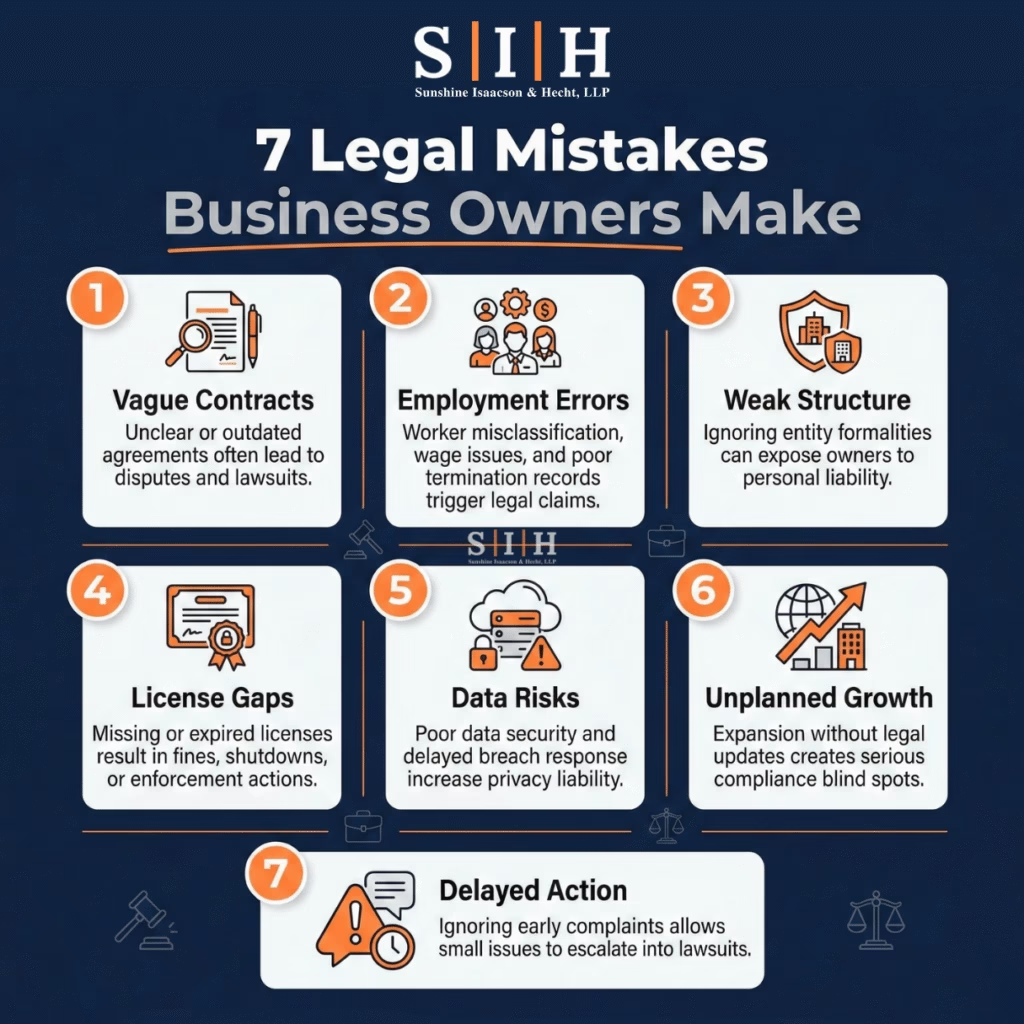
It is imperative to know the most common pitfalls that New York business owners make in order to avoid the expensive litigation. Contracts and employment choices to compliance and data protection, the following sections present the most frequent legal traps and what can be done to mitigate exposure before matters get out of control.
Agreements That Create Disputes Instead of Protection
Contracts should bring about clarity, and most business disputes in New York start with poorly drafted contracts. Unclear wording regarding the duties, payment conditions, scope of work, or the right to terminate can soon result in different interpretations. Where courts are very strict in reviewing written terms, ambiguous agreements tend to be litigated as opposed to resolved. Informal structures and old contracts expose risk even more, particularly when businesses expand or switch services.
How to Avoid Contract-Related Lawsuits
- Be explicit, precise in language, which identifies obligations, deadlines and remedies.
- Formal written contracts on all material business agreements.
- Periodically review contracts to reflect the current operations.
- Modifications and alterations of documents.
- Do not use templates that are not specific to the New York law.

Employment Decisions That Trigger Legal Claims
Employment decisions are a common cause of lawsuits. While our firm does not specifically handle labor law issues, we do advise our business clients to take certain precautions:
How to Avoid Employment-Related Legal Risks
- Ensure that employees and independent contractors are properly classified.
- Keep proper payroll, time keeping and wage record.
- Make sure that overtime, break and pay practices are in accordance with the state and local regulations.
- Record performance problems and punishments.
- Train supervisors on legal practices of hiring, discipline and firing.
Weak Business Structure and Loss of Liability Protection
Many business owners sabotage their own liability coverage. The personal and business money may be mixed, not adhering to the governance requirements and not keeping the records may enable the courts to disregard the business entity altogether. In the event of this, the owners can be personally liable to debts, judgments, and settlements that were supposed to be confined to the business.
How to Avoid Structural and Liability Exposure
- Separate business and personal money.
- Keep necessary records, resolutions and governance records.
- Adhere to the formalities that are related to the selected business entity.
- Consider the business structure as the operations and risk levels vary.
- Close the gaps as soon as possible before conflicts emerge.
- Have proper insurance coverage for every contingency.
Licensing and Regulatory Oversights in Daily Operations
The state and local regulations of New York business are dense. Licensing and permit concerns arise frequently when businesses are expanding, moving or launching new services. The regulatory requirements are also dynamic and businesses that do not keep up with the changes risk being out of compliance without their knowledge. Some of these industries are under increased scrutiny, and any regulatory misstep is even more prone to enforcement or lawsuits.
How to Avoid Compliance and Licensing Problems
- Determine all the necessary licenses and permits of each business activity.
- Keep a close watch on track renewal deadlines and filing requirements.
- Track both state and local regulatory changes.
- Delegate specific accountability in the compliance control.
- Undertake regular compliance audits to detect weaknesses in time.

Data Management and Digital Risk of Liability
New York companies are becoming more exposed to legal liability in terms of customer and employee information. Gathering sensitive data without sufficient protection may result in lawsuits in case of an attack. Cyber-attacks are known to result in lawsuits where victims of such attacks feel that they were not provided with reasonable security. To make the issue worse, failure to notify promptly or adequately in the event of breach may substantially raise penalties and liability.
How to Avoid Data Privacy and Cyber-Related Lawsuits
- Only collect data that is required to support business.
- Enforce sensible security controls over information stored.
- Educate workers on data management and cybersecurity.
- Establish an effective breach response and notification plan.
- Review data security requirements on business operations.
Growth and Expansion Without Legal Adjustment
The New York businesses are usually in trouble with the law due to rapid growth. The rush to hire, expand into new markets, or add services without revising contracts, policies, and compliance practices tend to create legal blind spots. The solution to a smaller business might not be the same as the regulatory or operational requirements of the business as it grows, exposing the business to more disputes and enforcement measures.
How to Avoid Growth-Related Legal Mistakes
- Check legal papers prior to the expansion of operation or services.
- Revise the employment policies when the staffing requirements vary.
- Firm licensing and regulatory requirements of new activities.
- Streamline internal processes with greater complexity of operations.
- Ask for advice prior to, not after, expansion decisions are made.
Delayed Response to Early Warning Signs
A lot of lawsuits would be prevented in case the problems were managed in the past. The legal climate in New York is such that minor issues may grow out of proportions when not addressed. When complaints are ignored, corrective action is delayed or the assumption that disputes will resolve themselves, formal claims are usually made when positions become entrenched and evidence piles up.
How to Avoid Escalation into Litigation
- Respond to disagreements and grievances in a timely manner.
- Paperwork to address internal problems.
- Research about issues and prevent their escalation.
- Do not give informal or inconsistent answers to serious problems.
- Act on risks when they are detected.
Conclusion: Legal Risk in New York Can be Reduced by being Proactive
The legal errors that New York business owners commit that result in lawsuits are hardly dramatic at the start. In most cases, they entail ambiguous contracts, neglected compliance standards, misconduct in employment or slow reaction to arising issues. With a very strict and actively implemented environment, even small negligence can lead to severe legal ramifications.
Business owners can greatly minimize their exposure to lawsuits by focusing on clarity, documentation, compliance, and timely action. Proactive legal awareness does not mean predicting conflicts, it is preventing them before they can get a hold.
Working with an experienced Commercial Litigation Firm like SIH Attorneys helps business owners stay compliant, strengthen contracts, and reduce legal risks — so you can focus on growing your business with confidence.
FAQ
What Is the Fastest Time to Transform a Legal Matter Into a Lawsuit in New York?
In most instances, conflicts are quicker to develop in New York because of the strict enforcement, employee-friendly legislation, and the active regulatory bodies. What may start as a complaint or audit may end up in formal litigation in a few months unless it is dealt with immediately.
Is It Possible to Take Legal Action Against a Business on What It Did Many Years Ago?
Yes. Most claims have statutes of limitations, where a lawsuit may be brought many years after the supposed problem has taken place, particularly in wage, contract, or discrimination claims.
Is It Possible to Use Internal Emails and Text Messaging as Evidence?
Yes. Internal communications, such as emails, texts, and messaging apps, are common requests and evidence in New York litigation to support or refute claims.
Do Lawsuits Occur in The Hiring or Termination Process?
Both. Lawsuits revolve around hiring, wage practices and terminations, many of which occur when there is no documentation or inconsistent procedures.
Do New York City Businesses Face Greater Risk than Other Businesses in The State?
Often, yes. There are other local laws and enforcement mechanisms in New York City that add to the compliance requirements. Companies in the city have to comply with the state and local needs.
Are Written Company Policies a Way of Safeguarding a Business Against Lawsuits?
Policies are useful, but only in case they are up to date, meet the New York law, and are regularly implemented. The existence of old-fashioned or selectively implemented policies may in fact add to legal risk.
Will Business Insurance Keep Lawsuits Away?
Not always. Certain jurisdictions mandate mediation of some disputes, whereas others suggest it on a voluntary basis based on the case.
When Does a New York Business Need Legal Advice?
Always! The best moment is when the disagreements have not yet been experienced, when the contract is being drafted, when hiring, when the policy is being revised, or when expanding the business, not when the legal action has already been initiated.

