Breach of Contract Laws in New York: What Businesses Should Know

Contracts are supposed to Protect Your Business. They set the rules. Who does what. When payments are due. What happens if something goes wrong. But sometimes… things still go wrong. A vendor doesn’t deliver. A partner backs out. A client refuses to pay. And suddenly you’re wondering if this is just a bad situation — or something you can actually sue over.
If you run a business in New York, understanding breach of contract law is important. Not in a complicated, law-school way. Just enough to protect yourself. Let’s break it down.
What is a Breach of Contract Under New York Law?
A breach of contract happens when someone fails to do what they promised in a legally binding agreement. For a contract to be valid in New York, there must be:
- An offer
- Acceptance
- Consideration (something of value exchanged)
- Clear intent by both sides
If those pieces are there, and one party doesn’t perform their part, that may be a breach.
Now, not every mistake counts. If someone is a day late but fixes the issue and no harm is done, that usually doesn’t turn into a lawsuit. Courts care about real impact. Real loss.
But when the failure causes financial damage — lost revenue, extra expenses, reputational harm — that’s when things get serious.
What Constitutes a Breach of Contract?
To win a breach of contract case in New York, four basic elements must be proven:
- A valid contract existed
- You performed your obligations (or were ready to)
- The other party failed to perform
- You suffered damages as a result
Miss one of these, and the case gets weaker.
For example, if you stopped performing first, the other side may argue you breached. And that complicates everything.
Courts also look closely at the actual wording of the contract. What exactly did it say? Was the obligation clear? Was there a deadline? Was there a condition that had to happen first?
Details matter more than people think.
Types of Breach of Contract Claims in New York
Not all breaches are the same. And the type matters.
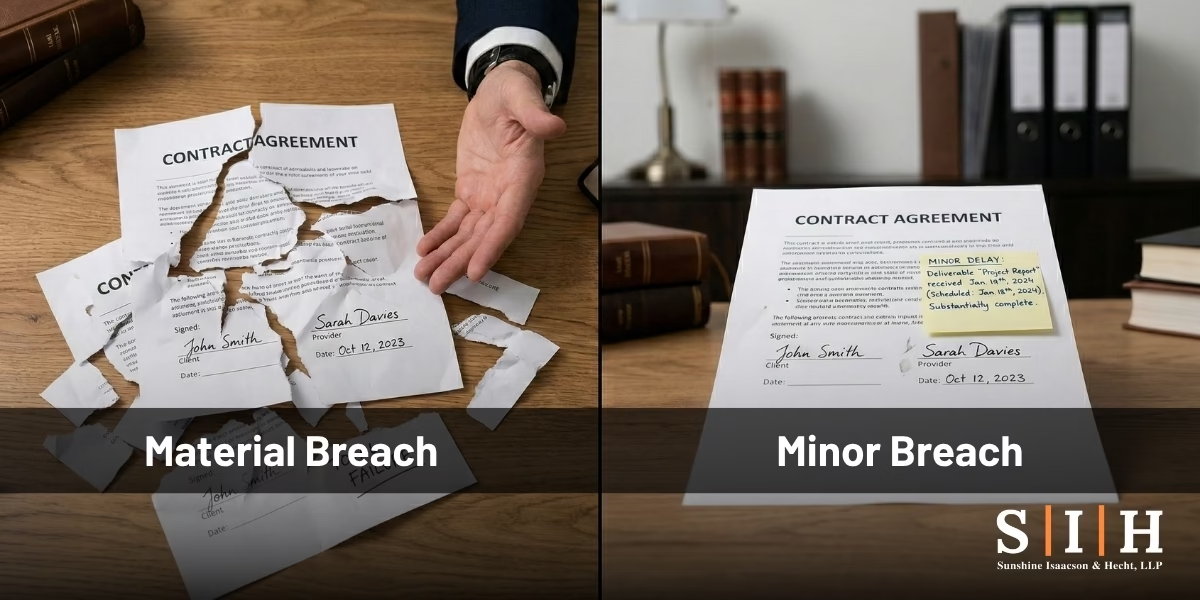
Material Breach
This is a major failure. It goes to the heart of the agreement. If it’s material, the non-breaching party may be excused from continuing performance and can sue for damages.
Example: A supplier never delivers critical goods your business depends on.
Minor (Partial) Breach
This is a smaller issue. The contract still stands, but damages might be owed.
Example: A shipment arrives slightly late but is still usable.
Anticipatory Breach
This happens when one party clearly states they will not perform — before performance is even due. If someone says, “We’re not going to complete the project,” you don’t have to wait for the deadline to pass.
Actual Breach
This is when the deadline comes and goes… and nothing happens. Understanding which type applies helps you decide how to respond.
Material vs. Minor Breach of Contract: What’s the Difference?
This is where Business Owners often get confused.
A material breach is serious enough that it defeats the purpose of the contract. You’re no longer getting what you bargained for.
A minor breach is more technical. The contract still has value.
New York courts look at things like:
- How much benefit was lost
- Whether the breach can be fixed
- Whether the failure was intentional
- How much damage was actually caused
Sometimes the difference isn’t obvious. And honestly, reasonable people can disagree about it.
That’s why documentation is so important. Emails. Invoices. Change orders. Everything.
When Does Breach of Contract Become Criminal?
Most breach of contract cases are civil matters. That means lawsuits for money — not jail time.
But there are situations where criminal charges can come into play.
For example:
- Fraud
- Intentional misrepresentation
- Embezzlement
- Forgery
If someone entered a contract with the intent to deceive or steal, that’s more than just a breach. That’s potentially criminal.
Still, most business disputes don’t rise to that level. They’re about performance failures. Not criminal conduct.
Common Causes of Business Contract Disputes in New York
Contract disputes happen all the time. Especially in a fast-paced business environment like New York.
Common causes include:
- Non-payment or late payment
- Failure to deliver goods or services
- Missed deadlines
- Poor workmanship
- Ambiguous contract terms
- Disagreements over scope of work
- Early termination disputes
A lot of disputes start with unclear language. Or assumptions. One side thought something was included. The other side didn’t.
Clear contracts reduce risk. They don’t eliminate it. But they help.
What Remedies are Available for Breach of Contract in New York?
If you prove a breach, the court will look at how to fix the harm. The goal is usually to compensate — not punish.
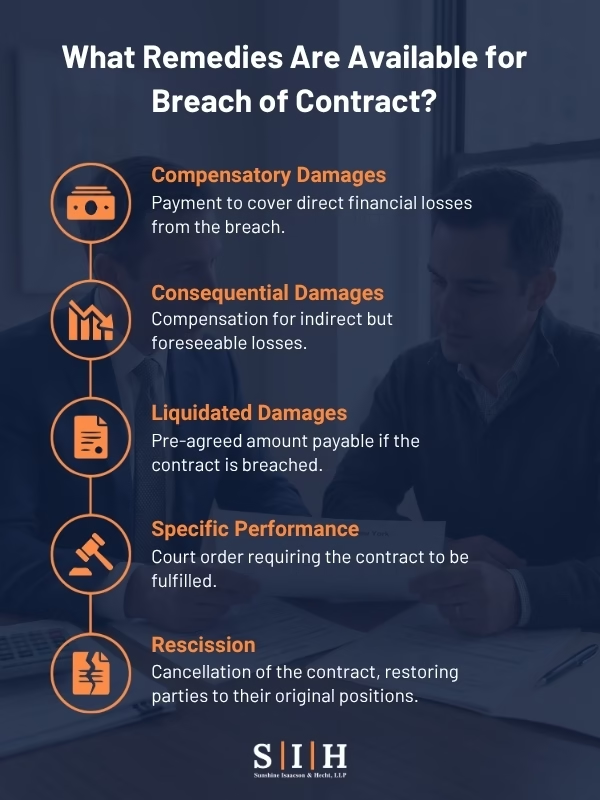
Here are the main remedies available:
- Compensatory Damages
Money to cover your direct financial losses. This can include unpaid amounts, replacement costs, or lost profits. - Consequential Damages
Indirect losses that were reasonably foreseeable when the contract was signed. For example, losing future business because a supplier failed to deliver. - Liquidated Damages
A specific dollar amount written into the contract ahead of time. Both parties agreed to it in case of a breach. - Specific Performance
A court order requiring the breaching party to fulfill their obligation. This usually applies when the subject of the contract is unique, like real estate. - Rescission
Canceling the contract completely and restoring both sides to their original position, as much as possible.
Not every case qualifies for all of these. It depends on the contract language and the actual damage caused.
And sometimes, figuring out the real value of damages is harder than proving the breach itself.
How to File a Breach of Contract Lawsuit in New York
If negotiations fail, filing a lawsuit may be the next step.
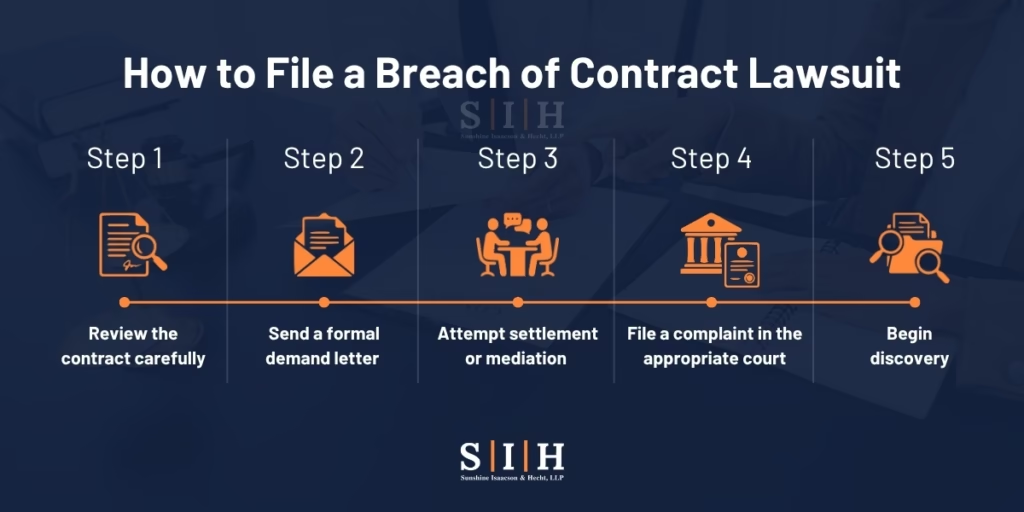
Here’s the general process:
- Review the contract carefully
- Send a formal demand letter
- Attempt settlement or mediation
- File a complaint in the appropriate court
- Begin discovery (exchange of documents and information)
In New York, the statute of limitations for most written contract claims is six years. Miss that deadline, and your case may be dismissed. Even if it’s strong.
Also, some contracts require arbitration instead of court. So check the agreement first.
Litigation takes time. And money. That’s why many cases settle before trial.
When Should a New York Business Hire a Breach of Contract Attorney?
Not every dispute needs a lawyer. Sometimes a firm letter solves the issue.
But you should strongly consider legal help if:
- The amount in dispute is significant
- The contract language is complex
- The other side has already hired an attorney
- You’re being accused of breaching
- The dispute threatens your business operations
An experienced breach of contract attorney can:
- Evaluate the strength of your claim
- Identify risks
- Estimate damages
- Draft demand letters
- Represent you in court or arbitration
Waiting too long can make things worse. Evidence disappears. Deadlines pass. Positions harden.
Getting early advice often saves money later. Even if you decide not to file suit.
How Businesses Can Reduce the Risk of Contract Disputes
Not every contract dispute can be avoided. But many of them can. A little attention upfront can prevent months of stress later.
- Use clear written contracts
- Define deadlines and payment terms
- Include dispute resolution clauses
- Keep documentation
- Review contracts before signing
This positions your firm as proactive — not just reactive.
Final Thoughts
Breach of contract disputes are stressful. They drain time and energy. And sometimes they feel personal, even when they’re not.
The key is understanding your rights under New York law. Know what qualifies as a breach. Know what damages may be available. And know when to bring in legal support.
If your business is facing a contract dispute, acting early — not emotionally, but strategically — can make a big difference.
Because at the end of the day, contracts are about Protecting Your Business. And when one breaks, you need to know what comes next.
ATTORNEY ADVERTISING
This blog is provided for general informational purposes only and does not constitute legal advice or create an attorney-client relationship. Legal outcomes depend on the specific facts and circumstances of each matter. Consult SIH Attorneys to discuss your specific legal matter and learn about your legal options.
FAQ
How Much Can You Sue for Breach of Contract?
You can usually sue for the amount of money you lost because of the breach. This may include unpaid amounts, extra expenses, or lost profits. Courts focus on actual financial harm — not punishment.
Is Breach of Contract a Tort?
No, not usually. Breach of contract is a civil claim based on a broken agreement. A tort involves violating a legal duty, like negligence or fraud. In rare cases, the same conduct may involve both.
What are the Five Remedies for Breach of Contract?
The main remedies include:
- Compensatory damages
- Consequential damages
- Liquidated damages
- Specific performance
- Rescission
The remedy depends on the contract and the harm caused.
What is the Statute of Limitations for Breach of Contract in New York?
In most cases, you have six years from the date of the breach to file a lawsuit. Missing this deadline can prevent you from bringing a claim.
Can You Sue Without a Written Contract?
Sometimes, yes. Oral contracts can be enforceable. But proving them is harder. Certain agreements must legally be in writing to be valid.
Do You Need a Lawyer for a Breach of Contract Case?
Not always. But if large amounts of money are involved or the contract is complex, legal guidance can protect your business and strengthen your position.